SKU:IPC-HFW2531T-ZS-S2
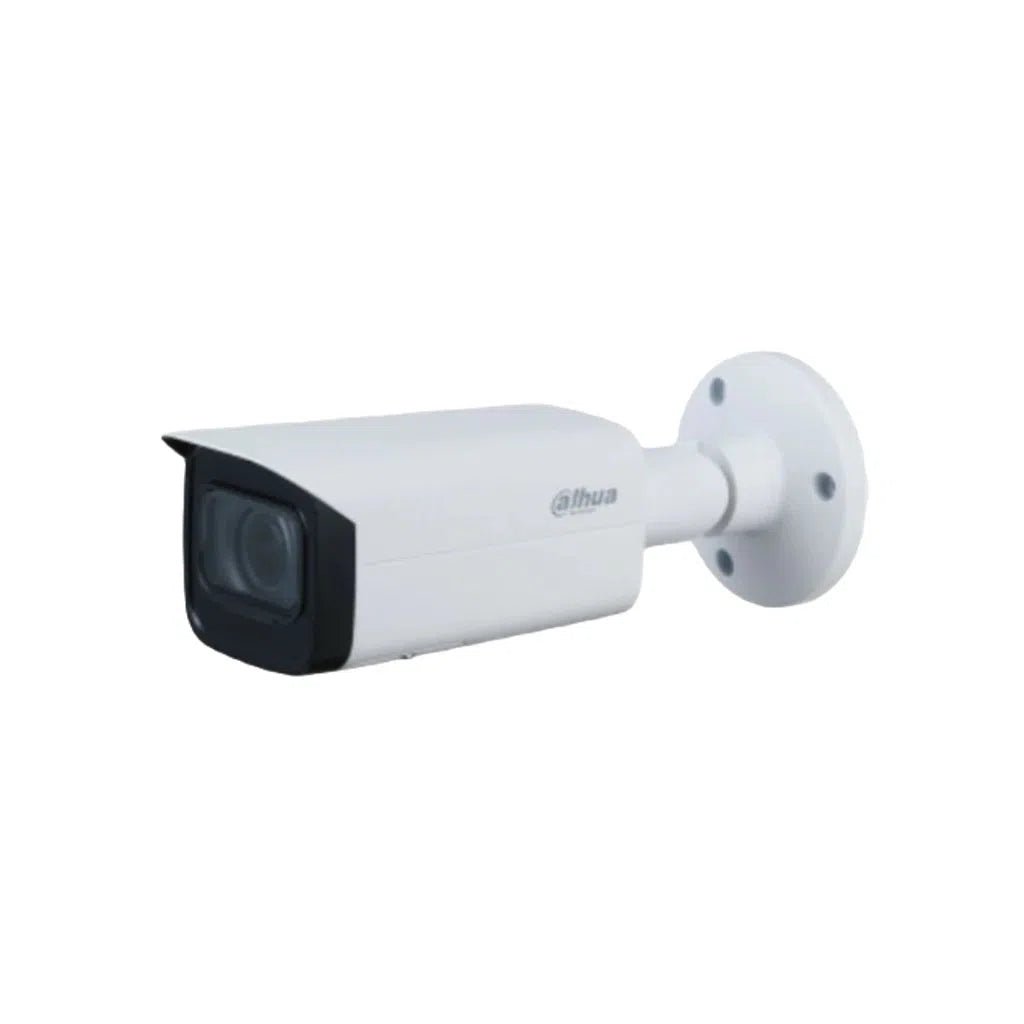
Dahua 5MP Lite IR Vari-focal Bullet Network Camera - IPC-HFW2531T-ZS-S2
Login to buyKey Features
- 1/2.7” 5Megapixel progressive CMOS
- H.265 & H.264 dual-stream encoding
- 15fps@5M(2592×1944)&25/30fps@3M(2304×1296)
- WDR(120dB), Day/Night(ICR), 3DNR, AWB, AGC, BLC
- Multiple network monitoring: Web viewer, CMS(DSS/PSS) & DMSS
- Micro SD card slot, up to 128GB
- 2.7~13.5mm varifocal lens
- Max IR LEDs Length 60m
- IP67, PoE+
-
Vendor:
Dahua
- Tags: 5mp, Bullet camera, Motorised camera
- Description
Product Overview
Most security cameras are built for the first twenty metres. Beyond that, a wide-angle lens has spread its pixels so thin that you are recording the fact something happened rather than any useful detail about it — and after dark, the infrared has usually run out long before the camera has.
The Dahua IPC-HFW2531T-ZS-S2 is built for the distance beyond that. It combines a motorised 2.7–13.5 mm varifocal lens — adjustable remotely, no ladder — with 60 m of infrared from four IR LEDs. That is half again the reach of the next-longest camera in our range and double what a standard fixed turret manages.
Zoomed wide it behaves as a normal wide-angle camera. Zoomed in, its published identification range extends to 22 m — more than three times what a fixed-lens camera achieves — and its detection range reaches 222 m. Paired with a bullet housing that mounts easily on a wall or pole and carries an integrated sunshade, it is the camera for long driveways, fence lines, car parks and rural boundaries where everything else falls short.
This is a Lite-series camera focused on optics and reach rather than AI. It offers 5MP resolution, 120 dB WDR, tripwire and intrusion detection, microSD recording, IP67 sealing and PoE+ power. It does not include human and vehicle classification — see the buyer tips, because that distinction matters.
Key Capabilities
60 m Infrared Reach
Four IR LEDs delivering illumination to 60 m with automatic or manual control — the longest reach in our range and double what a typical fixed turret manages. On a long driveway, a deep yard or a rural boundary, that is the difference between the far end of the scene being visible at night and disappearing into black.
Motorised Varifocal 2.7–13.5 mm
The lens zooms and focuses under motor control from software, so framing is set from the ground rather than on a ladder — and can be changed months later without touching the camera. Field of view runs from 95° wide down to 27° telephoto, with an F1.4 maximum aperture.
22 m Identification at Telephoto
Dahua's published DORI Identify figure reaches 22 m zoomed in, against 6 m at the wide end. That is the practical difference between a camera that shows someone was present at the far gate and one that shows who. Detection range extends to 222 m zoomed in.
5MP Resolution
2592 × 1944 gives crop headroom on top of the optical zoom — you can zoom the lens and crop the recording afterwards. Note the frame rate trade-off in the buyer tips: 5MP runs at 15 fps, with 25/30 fps available at 2304 × 1296.
Bullet Housing With Integrated Sunshade
The bullet form factor puts a physical sunshade over the lens, which helps considerably with direct sun, glare and driving rain on exposed positions. It is also visibly a camera from a distance — a deterrent in its own right on a front boundary or a commercial frontage.
120 dB WDR and Image Processing
120 dB wide dynamic range plus 3D noise reduction, BLC, AWB, AGC and automatic day/night ICR switching. WDR is what saves the backlit shot of someone standing in a gateway with bright sky behind them — the most common way outdoor footage becomes useless.
Tripwire and Intrusion Detection
Draw a virtual line across a gate or a zone around a yard and be alerted when it is crossed. Note this is geometry-based detection without AI object classification — it triggers on movement across the boundary rather than distinguishing a person from an animal. Draw zones tightly for best results.
Smart H.265+ Compression
Smart H.265+ and H.264+ drop the bitrate through static periods and lift it when something happens, with a wide range of selectable resolutions from 5MP down to CIF so the stream can be matched to available bandwidth and drive capacity.
IP67 Sealed, PoE+ Powered
Fully dust-tight and sealed against water for exposed wall, eave and pole positions. Note this camera requires PoE+ rather than standard PoE — check the buyer tips before ordering if you are connecting to an existing switch or NVR.
Bullet or Turret — Which Should You Choose?
Most of the cameras we sell are turrets. This is a bullet, and the difference is genuinely worth understanding because it affects where the camera works best.
Bullets are better for…
- Exposed positions. The integrated sunshade helps with direct sun, glare and driving rain.
- Visible deterrence. Recognisable as a camera from a distance, which has value on a front boundary.
- Long-range work. The housing shape suits the larger optics and longer IR arrays used for distance.
- Pole and wall mounting. Straightforward to aim along a fence line or driveway.
Turrets are better for…
- Spider webs. A bullet's sunshade and body give spiders somewhere to anchor, and webs across the lens trigger IR reflections at night. Turrets suffer less.
- Low-profile installs. A turret sits closer to the eave and is less visually intrusive.
- Tamper resistance. A bullet on an arm is easier to knock out of alignment.
- Tight eave clearance. Bullets need more room to aim properly.
The spider issue is worth taking seriously in Australia and is the most common complaint we hear about bullet cameras. It is manageable — mount clear of walls and eave corners where possible, and wipe the sunshade and lens area over occasionally as part of normal maintenance. On a long-range position the advantages of the bullet housing usually outweigh it.
Best For
60m IR reaches the far gate at night
Detection out to 222m zoomed in
Optical zoom concentrates on what matters
Integrated sunshade handles glare
Easy to aim along a line of sight
Adjust remotely instead of re-mounting
Why Choose a Long-Range Varifocal Bullet
There is a problem that no amount of resolution solves, and it catches a lot of people out. If the thing you need to see is a gate twenty-five metres down a driveway, a wide-angle camera will not show it to you clearly — not at 5MP, not at 8MP, not at any resolution. The pixels are spread across too much scene, so too few of them land on the subject.
Optical zoom is the only real fix, because it puts the full sensor onto a narrower slice of the view. That is why this camera identifies at 22 m zoomed in where a fixed-lens model manages 6–10 m. And because the zoom is motorised, you set the framing by looking at the live picture rather than guessing from a plan — then change it later without a ladder if the site changes.
The 60 m infrared is what makes it work after dark. Optical reach is useless if the scene is not lit, and this is where most long-range cameras quietly fail — plenty offer zoom with only 30 m of IR, so at night your effective range collapses back to what a standard camera would give you. Sixty metres of illumination means the zoom is still doing something useful at 2am.
What you trade is the AI. This is a Lite-series camera built around optics rather than analytics, so it has tripwire and intrusion but not the deep-learning human and vehicle classification found in the WizSense 3-Series. If false alerts are your main frustration, that is the more important feature and we would point you elsewhere. If reach is the problem, this is what solves it.
Total Security Equipment stocks genuine Dahua product across our Melbourne and Sydney showrooms with compatible NVRs, PoE+ switches, brackets, storage and mounting hardware, trade accounts for installers, and local support.
Buyer Decision Tips
Key Features & Technical Specifications
|
Camera |
|||||||||||||||||||||||||||||||||||||||||||||||||||||||||||
|
Image Sensor |
1/2.7” 5Megapixel progressive CMOS |
||||||||||||||||||||||||||||||||||||||||||||||||||||||||||
|
Effective Pixels |
2592(H) x1944(V) |
||||||||||||||||||||||||||||||||||||||||||||||||||||||||||
|
RAM/ROM |
512MB/32MB |
||||||||||||||||||||||||||||||||||||||||||||||||||||||||||
|
Scanning System |
Progressive |
||||||||||||||||||||||||||||||||||||||||||||||||||||||||||
|
Electronic Shutter Speed |
Auto/Manual, 1/3~1/100000s |
||||||||||||||||||||||||||||||||||||||||||||||||||||||||||
|
Minimum Illumination |
0.02Lux/F1.6( Color,1/3s,30IRE) 0.2Lux/F1.6( Color,1/30s,30IRE) 0Lux/F1.6(IR on) |
||||||||||||||||||||||||||||||||||||||||||||||||||||||||||
|
S/N Ratio |
More than 50dB |
||||||||||||||||||||||||||||||||||||||||||||||||||||||||||
|
IR Distance |
Distance up to 60m(197ft) |
||||||||||||||||||||||||||||||||||||||||||||||||||||||||||
|
IR On/Off Control |
Auto/ Manual |
||||||||||||||||||||||||||||||||||||||||||||||||||||||||||
|
IR LEDs |
4 |
||||||||||||||||||||||||||||||||||||||||||||||||||||||||||
|
Lens |
|||||||||||||||||||||||||||||||||||||||||||||||||||||||||||
|
Lens Type |
Motorized(-ZS),Manual(-VFS) |
||||||||||||||||||||||||||||||||||||||||||||||||||||||||||
|
Mount Type |
Board-in |
||||||||||||||||||||||||||||||||||||||||||||||||||||||||||
|
Focal Length |
2.7mm~13.5mm |
||||||||||||||||||||||||||||||||||||||||||||||||||||||||||
|
Max. Aperture |
F1.4 |
||||||||||||||||||||||||||||||||||||||||||||||||||||||||||
|
Angle of View |
H:95°~27°, V:70°~20° |
||||||||||||||||||||||||||||||||||||||||||||||||||||||||||
|
Focus Control |
Motorized(-ZS),Manual(-VFS) |
||||||||||||||||||||||||||||||||||||||||||||||||||||||||||
|
Close Focus Distance |
0.3m |
||||||||||||||||||||||||||||||||||||||||||||||||||||||||||
|
DORI Distance |
Lens |
Detect |
Observe |
Recognize |
Identify |
||||||||||||||||||||||||||||||||||||||||||||||||||||||
|
W |
64m(210t) |
26m(85ft) |
13m(43ft) |
6m(20ft) |
|||||||||||||||||||||||||||||||||||||||||||||||||||||||
|
T |
222m(728ft) |
89m(292ft) |
44m(144ft) |
22m(72ft) |
|||||||||||||||||||||||||||||||||||||||||||||||||||||||
|
PTZ |
|||||||||||||||||||||||||||||||||||||||||||||||||||||||||||
|
Pan/Tilt Range |
Pan:0° ~360° ;Tilt:0° ~90° ;Rotation:0° ~360° |
||||||||||||||||||||||||||||||||||||||||||||||||||||||||||
|
Intelligence |
|||||||||||||||||||||||||||||||||||||||||||||||||||||||||||
|
Event Trigger |
Motion detection, Video tampering , Scene changing , Network disconnection , IP address conflict, Illegal Access,Storage anomaly |
||||||||||||||||||||||||||||||||||||||||||||||||||||||||||
|
IVS |
Tripwire, Intrusion |
||||||||||||||||||||||||||||||||||||||||||||||||||||||||||
|
Video |
|||||||||||||||||||||||||||||||||||||||||||||||||||||||||||
|
Compression |
H.265/H.264H/MJPEG(Sub Stream) |
||||||||||||||||||||||||||||||||||||||||||||||||||||||||||
|
Smart Codec |
Support H.265+/H.264+ |
||||||||||||||||||||||||||||||||||||||||||||||||||||||||||
|
Streaming Capability |
2 Streams |
||||||||||||||||||||||||||||||||||||||||||||||||||||||||||
|
Resolution |
5M(2592×1944)/4M(2688x1520)/3M(2304×1296/2 048x1536)/1080P(1920×1080)/720P(1280×720)/ D1(704×576/704×480)/VGA(640×480)/ CIF(352×288/352×240) |
||||||||||||||||||||||||||||||||||||||||||||||||||||||||||
|
Frame Rate |
Main Stream: 5M (1 ~ 15fps)/3M(1 ~ 25/30fps) |
||||||||||||||||||||||||||||||||||||||||||||||||||||||||||
|
Sub Stream: D1/CIF(1 ~ 25/30fps) |
|||||||||||||||||||||||||||||||||||||||||||||||||||||||||||
|
Bit Rate Control |
CBR/VBR |
||||||||||||||||||||||||||||||||||||||||||||||||||||||||||
Ideal Use Cases
Long Driveways and Distant Gates
The clearest case for this camera. Where the gate sits well back from the house, a fixed wide-angle camera shows that a vehicle arrived and nothing more. Zoomed in, this identifies at 22 m, and the 60 m infrared keeps the far end lit after dark rather than fading to black at 30 m like most cameras.
Rural Properties and Fence Lines
Long boundaries are impossible to cover usefully with wide-angle cameras — the subject is always too small by the time it matters. Optical zoom concentrates the sensor on the section that counts, and the extended IR reach suits properties with no perimeter lighting at all.
Car Parks and Commercial Yards
Open areas where the useful framing is not obvious until the camera is live. Start wide to understand the traffic pattern, then zoom onto the entry lane, the loading bay or the section that keeps generating incidents — without ordering a second camera to get there.
Exposed and Sun-Facing Positions
The integrated sunshade earns its keep on a west-facing wall, an unshaded pole or a rooftop position where low sun would otherwise flare the lens for an hour every evening. Combined with 120 dB WDR, this handles harsh directional light better than a bare turret.
The Long Shot Every System Is Missing
Almost every system we see has the same gap. Four or six cameras cover the doors, the driveway entry and the back yard perfectly well — and then there is one position nobody solved, because it is simply too far away. The rear boundary. The far paddock gate. The end of a hundred-metre driveway. The shed at the back of the block. Adding more wide-angle cameras does not fix it; they would show the same unusable smudge from a different angle. This is the camera that fills that gap: optical zoom to put the pixels where they are needed, and 60 m of infrared so it still works at night. One of these alongside your existing cameras usually closes the last real weakness in a system.
Choosing the Right Model
Choose this model if…
- You need night coverage well beyond 30 m — the 60 m IR is the main reason to buy this.
- You need identification detail past about 10 metres.
- You want to set or change framing remotely rather than from a ladder.
- The position is exposed to direct sun or driving rain.
- You are mounting on a pole or wall aimed along a line of sight.
- Your switch or NVR supplies PoE+ (802.3at).
Choose a different model if…
- False alerts are your main frustration. No AI classification here — a WizSense 3-Series camera with SMD is the right answer.
- Your switch only supplies standard PoE (802.3af). This needs PoE+.
- You want higher resolution at range. The 8MP motorised turret identifies at 28 m, though with 40 m IR rather than 60 m.
- You want colour footage at night. Infrared only — greyscale after dark.
- You want audio or active deterrence. No microphone, no speaker, no strobe.
- The framing is obvious and close. A fixed-lens turret is cheaper and simpler.
FAQs
Does this need PoE+ or will normal PoE work?
It requires PoE+ (IEEE 802.3at), which supplies more power than the standard 802.3af that many budget switches and smaller PoE NVRs provide. On an 802.3af-only port the camera may not start, or may start and then reboot intermittently — which looks like a faulty camera but is a power problem. Check that your switch or NVR explicitly states 802.3at per port before ordering. We stock PoE+ switches if you need one.
How far away can it identify someone?
Around 6 m zoomed wide and up to 22 m zoomed in — those are Dahua's published Identify figures under the DORI standard, which covers recognising a stranger or reading a plate. The much larger 222 m figure you will see quoted is Detect, meaning only that something is present. See the DORI table above; it is the most useful thing on this page for deciding where to mount.
What is the difference between a bullet and a turret?
A bullet is the cylindrical shape on an arm with a built-in sunshade; a turret is the ball-in-socket dome that sits closer to the surface. Bullets handle direct sun and driving rain better, are more visible as a deterrent, and suit long-range optics. Turrets are lower profile, harder to knock out of alignment, and attract fewer spider webs. For a long-range position aimed along a driveway or fence line, the bullet is generally the better choice.
Do bullet cameras really get spider webs?
Yes, and it is the most common complaint about them in Australia. The sunshade and body give spiders anchor points, and a web across the lens reflects infrared straight back at night, producing white blur or repeated false triggers. It is manageable rather than disqualifying — mount with clear air around the housing, avoid tucking it into an eave corner, and wipe the sunshade and lens area over occasionally as normal maintenance.
Does it have human and vehicle detection?
No. It has tripwire and intrusion detection, which trigger when movement crosses a boundary you define, but it does not include SMD or deep-learning classification — so it cannot tell a person from an animal, a branch or a shadow. Expect more false alerts than a WizSense 3-Series camera, particularly in leafy or windy positions. If reducing false alarms is your priority, talk to us about a 3-Series model instead.
Why does 5MP only run at 15 fps?
It is a processing limitation at full resolution. At 2592 × 1944 the maximum is 15 fps; dropping to 2304 × 1296 gives 25/30 fps. For a driveway, gate or boundary — the work this camera is designed for — 15 fps is entirely adequate. For anything with fast movement close to the lens, run 3MP instead; most installs look better that way.
How does this compare to the 8MP motorised turret?
They solve slightly different problems. This 5MP bullet has 60 m of infrared against the turret's 40 m, so it works further out at night, and the bullet housing suits exposed pole and wall positions. The 8MP turret has higher resolution and identifies at 28 m versus 22 m in daylight, plus a larger 256 GB card. If night reach matters most, choose this. If daylight detail matters most, choose the turret.
Does it record in colour at night?
No. This is an infrared camera, so once ambient light drops below the switching threshold it moves to IR and records in greyscale. The upside is 60 m of IR reach, the longest in our range. If retaining colour after dark matters, ask about the Smart Dual Light or WizColor models, which either trigger a warm light on detection or run colour continuously.
Can I zoom it from my phone?
Zoom is controlled through the camera's own web interface and through Dahua software including DSS, PSS and the DMSS mobile app. Exactly where the control appears depends on the recorder and app you are using, so confirm your zoom controls work before closing up the installation rather than discovering it afterwards.
Is a varifocal camera worth it over a fixed lens?
For most positions, no — a fixed lens is cheaper, simpler and perfectly adequate for a standard driveway or entry. It is worth it in two situations: when you need identification detail beyond about 10 metres, which optical zoom achieves and extra megapixels do not; and when the framing is uncertain or the mounting position is hard to reach again. Outside those, buy fixed and save the money.
Will it work with my existing NVR?
It will record on most recorders, and works fully with Dahua NVRs for zoom control, IVS event handling and configuration. Two things to confirm: that the recorder or switch supplies PoE+ per port, and that it handles 5MP per channel if you intend to run full resolution. Send us the model and we will check both.
Will it cope with exposed Australian conditions?
Yes. IP67 means fully dust-tight and rated against temporary water immersion, and the integrated sunshade adds real protection against direct sun and driving rain — one of the reasons a bullet suits exposed positions. Seal the cable entry and use a weatherproof junction box for any termination, because that join rather than the housing is where outdoor failures almost always begin.
Where can I buy it and what support is included?
Available from Total Security Equipment online and across both showrooms, with Australia-wide shipping and compatible Dahua NVRs, PoE+ switches, brackets, junction boxes and storage in stock. Trade accounts and volume pricing are available for installers, and our team can advise on zoom setting, mounting position and PoE compatibility before you order.
Additional Information
Melbourne HQ
26 Davies Ave., Sunshine North, VIC 3020
03 9079 5566
Sydney Branch
38 Lisbon St., Fairfield East, NSW 2165
02 8722 0348
Ordering & Support
- Australia-wide shipping
- PoE+ switches in stock — required for this camera
- Compatible Dahua NVRs, brackets and storage available
- Trade accounts and volume pricing
- Phone support on zoom setup and PoE compatibility
- Download Spec Sheet
Not sure whether your switch supplies PoE+, or whether you need the zoom at all? Call our Melbourne team on 03 9079 5566 or Sydney on 02 8722 0348 — tell us the distance to what you need to see and we will tell you honestly which camera suits.