SKU:SD3A400-GN-A-PV
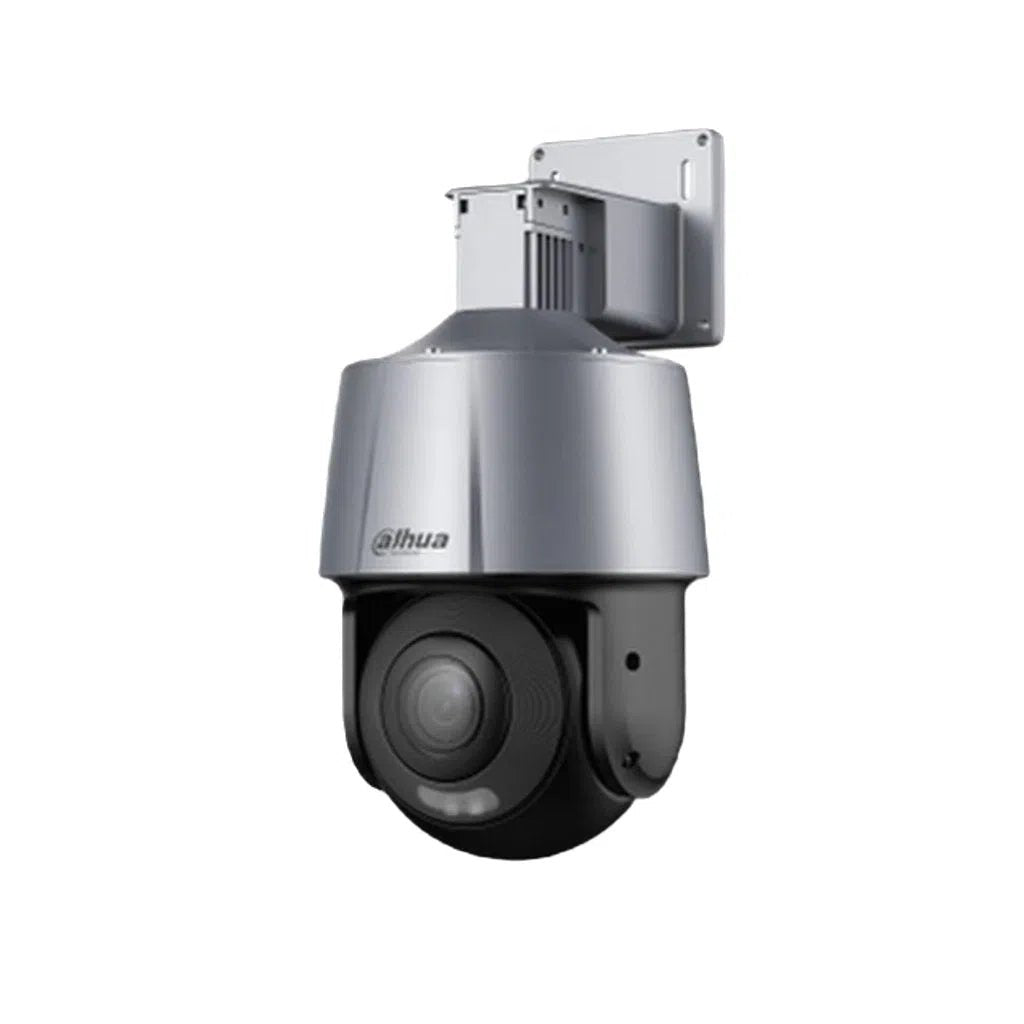
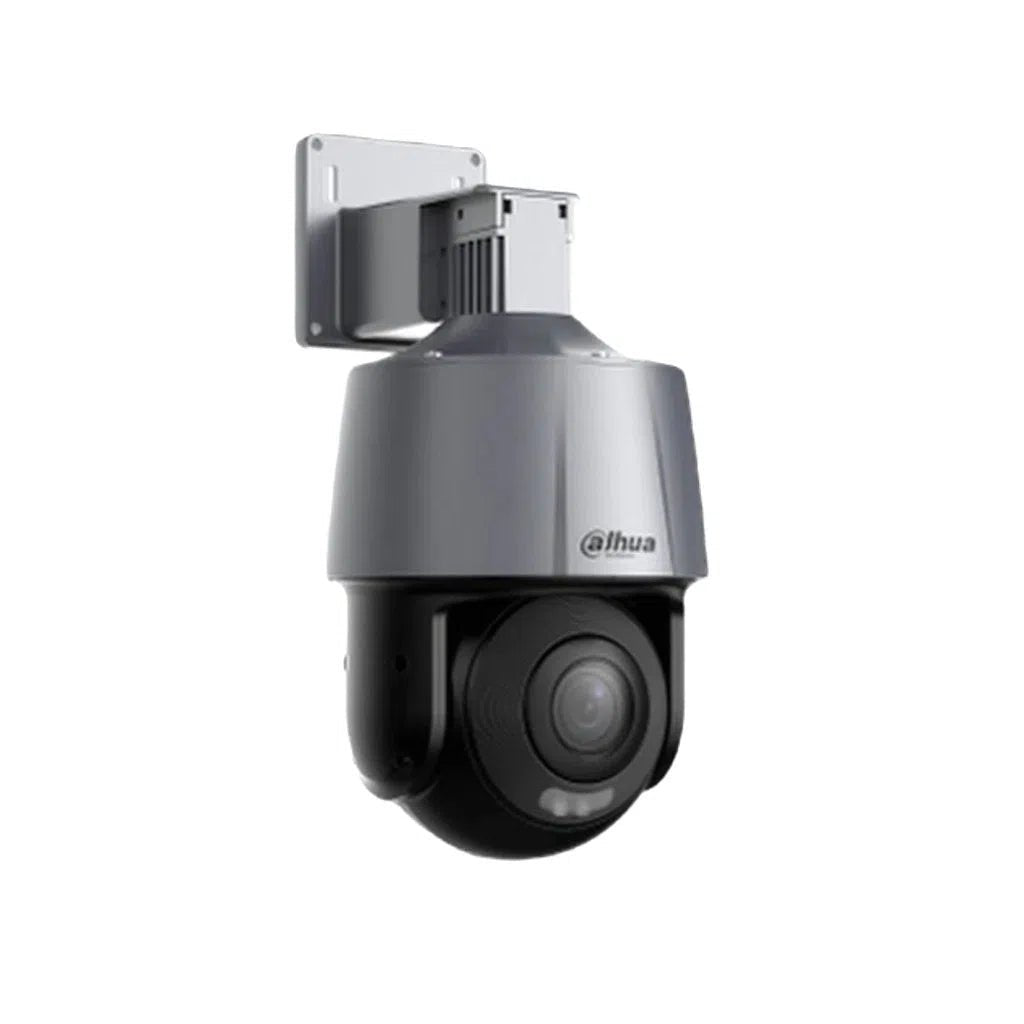
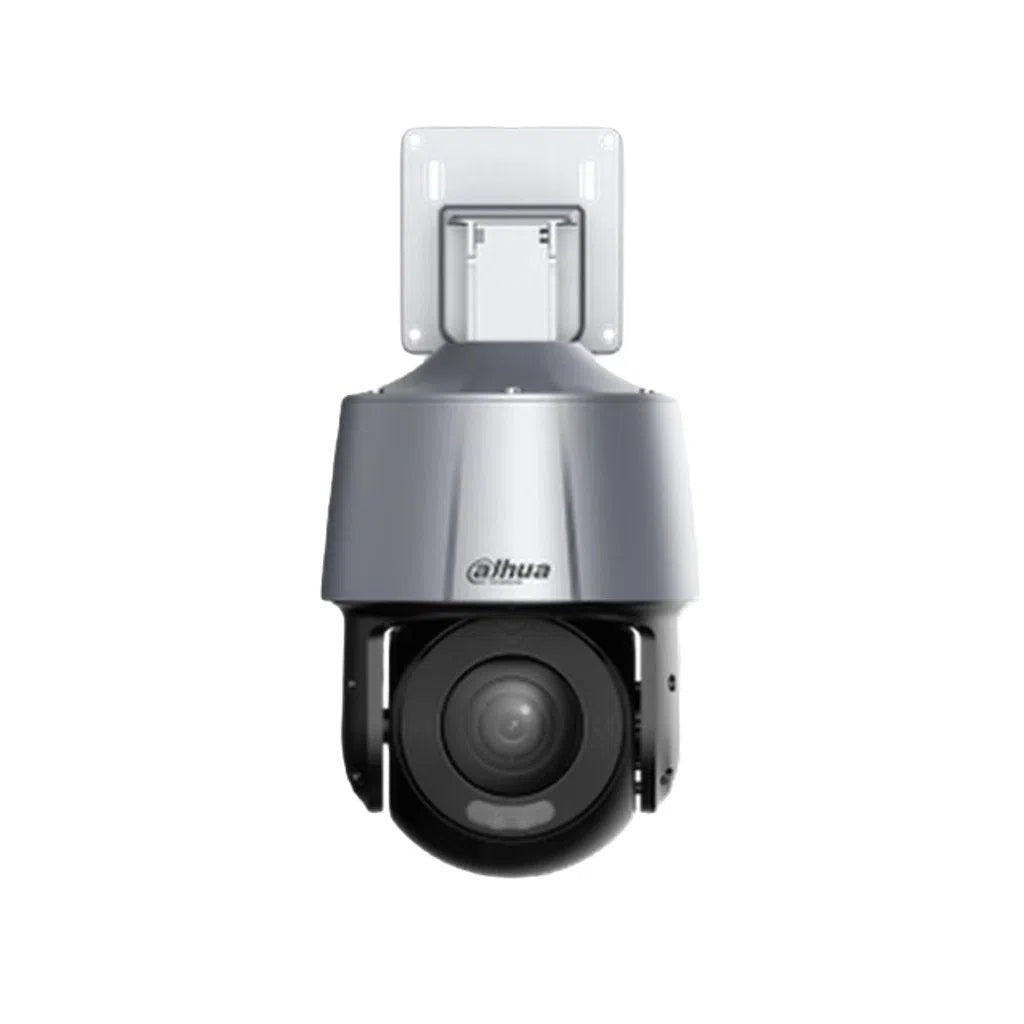
Dahua 4 MP Full-Color Network PTZ Camera - SD3A400-GN-A-PV
Login to buyThis versatility makes it suitable for various locations, including private homes, offices, and even fashion shops.
Features:
- 1/3″ 4Megapixel STARVIS™ CMOS
- IR distance up to 30 m
- H.265 Encoding
- PoE
- Max. 25/30 fps@4 MP
- IVS
-
Vendor:
Dahua
- Tags: Clearance
- Description
Product Overview
Every fixed camera has the same limitation: it points where you aimed it, and that is the only place it will ever look. If something happens just outside the frame, you have nothing.
The Dahua SD3A400-GN-A-PV removes that limitation. It is a compact full-colour PTZ camera that pans and tilts under your control, so a single unit can cover an entire room, courtyard or forecourt rather than one slice of it. Move it from your phone, set it to sweep between preset positions, or point it at whatever is happening right now.
It also carries active deterrence — the -PV in the model number. When motion is detected in a zone you have defined, a warning light and siren respond immediately rather than the camera simply logging the event and notifying you later. Most opportunistic intruders leave at that point, which is the entire idea.
Underneath sits a 4MP STARVIS™ sensor built for low light, delivering full-colour imaging where a standard camera would drop to greyscale, with illumination to 30 m, H.265 compression, IVS smart events, 25/30 fps at full resolution and single-cable PoE.
What "PTZ" Means on This Camera
This is the single most important thing to understand before ordering, because the term PTZ carries an assumption that does not apply to every camera wearing the label.
What this camera does
- Pans — rotates left and right under motor control.
- Tilts — angles up and down.
- Moves to preset positions you define.
- Can be controlled remotely from the app or recorder.
- Covers a far wider area than any fixed camera.
What it does not do
- No optical zoom. It cannot magnify a distant subject the way a long-range varifocal or full PTZ can.
- Identification distance is governed by the fixed lens, not by how far the camera can turn.
- Pointing it at something 40 metres away will not make that thing any larger in frame.
The practical way to think about it: this camera solves a coverage problem, not a distance problem. If you need one camera to watch a whole room, yard or forecourt instead of one corner of it, this is an excellent tool. If you need to identify someone at the far end of a long driveway, you need optical zoom — a motorised varifocal camera is the right answer and we would rather point you there than sell you this and have it disappoint you.
Key Capabilities
Motorised Pan and Tilt
The camera rotates and angles under motor control, so one unit covers what would otherwise take two or three fixed cameras aimed in different directions. Set preset positions for the spots that matter, or take manual control from the app when you want to look at something specific.
Active Deterrence (-PV)
The PV suffix means this camera responds rather than only recording. A warning light and siren trigger when motion is detected in a monitored zone, delivering a reaction while someone is still deciding whether to proceed — which is worth considerably more than footage reviewed the next morning.
Full-Colour Night Imaging
Built to hold colour after dark rather than switching to greyscale. Colour is the descriptor every incident report asks for first — the colour of a jacket, the colour of a vehicle — and it is precisely what conventional infrared discards. Illumination reaches up to 30 m.
4MP STARVIS™ Sensor
A 1/3″ 4-megapixel STARVIS CMOS — Sony's sensor technology designed specifically for low-light performance in security applications. That sensor choice is what makes the full-colour night imaging possible rather than being a marketing claim.
Full 25/30 fps at 4MP
Records at maximum resolution and full frame rate simultaneously, with no trade-off between the two. Smooth motion matters more on a moving camera than a fixed one, because both the subject and the frame can be in motion at the same time.
IVS Smart Events
Intelligent video system events including tripwire and intrusion detection, so you can define a boundary and be alerted when it is crossed rather than being notified about every change in the frame. These rules are also what trigger the deterrence response.
H.265 Compression
H.265 encoding compresses substantially harder than H.264 for the same picture quality, which extends how far back your recorder history reaches on the same drive and reduces the bandwidth the camera consumes on a shared NVR budget.
Single-Cable PoE
Powered over a single Cat5e or Cat6 run carrying data, power and pan/tilt control together. No plug pack at the camera position and no separate control cable, which keeps the installation to one penetration and one run.
Compact Form Factor
Considerably smaller than a traditional commercial PTZ dome, which makes it practical in domestic and small-commercial spaces where a full-size PTZ would be both physically and visually out of place — while still giving you movable coverage.
Best For
One camera instead of two or three
Sweep the area rather than one corner
Deterrence responds, not just records
STARVIS sensor holds colour longer
Compact enough not to dominate a space
Repoint it as the site changes
Why Choose a Pan/Tilt Camera
Fixed cameras are the right choice for most positions — they are cheaper, simpler and there is nothing to go wrong mechanically. There are two situations where a pan/tilt camera earns its place instead, and both are common enough to be worth understanding.
The first is when one position needs to watch several directions. A courtyard, a large room, a forecourt, an open workshop. Covering that properly with fixed cameras means two or three units, two or three cable runs and two or three recorder channels. A pan/tilt camera covers the same area from a single point with a single cable, and you can look at any part of it on demand.
The second is when you do not yet know what you need to watch. New premises, a changing layout, or a site where the problem area is not obvious until something has happened. A fixed camera commits you to a decision made too early. A pan/tilt camera lets the coverage follow the situation, and can be repointed from an app rather than a ladder.
Adding active deterrence changes the equation again, because the camera stops being a passive recorder. When motion crosses a boundary you have defined, the light and siren respond immediately. On a site with a recurring nuisance problem — people cutting through, repeat dumping, interference with a rear entry — a camera that reacts breaks the pattern in a way that a camera which only records never will.
What you should not buy this for is distance. There is no optical zoom, so identification range is set by the lens rather than by how far the camera can turn. If the far gate is the problem, a motorised varifocal camera is the right tool and we will tell you so.
Total Security Equipment stocks the Dahua range across our Melbourne and Sydney showrooms with compatible NVRs, brackets, storage and PoE gear, trade accounts for installers, and local support.
Buyer Decision Tips
Key Features & Technical Specifications
| Model | SD3A400-GN-A-PV |
| Camera Type | 4MP full-colour active deterrence network PTZ |
| Image Sensor | 1/3″ 4-megapixel STARVIS™ CMOS |
| Max. Resolution | 4MP at 25/30 fps |
| Movement | Motorised pan and tilt — [CONFIRM RANGE IN DEGREES] |
| Lens | [CONFIRM — fixed focal length, no optical zoom] |
| Night Imaging | Full colour |
| Illumination Distance | Up to 30 m |
| Active Deterrence | Warning light and siren (-PV) |
| Smart Events | IVS — tripwire, intrusion |
| Video Compression | H.265 |
| Power | PoE |
| Ingress Protection | [CONFIRM — indoor or outdoor rated] |
| Mobile App | DMSS |
| Availability | Clearance line — limited to remaining stock |
Ideal Use Cases
Courtyards and Enclosed Yards
An enclosed area with entries on multiple sides is exactly what a pan/tilt camera is for. Covering it with fixed cameras means two or three units and cable runs; one movable camera in the middle covers the whole space, with presets for the gate, the door and the storage area.
Open-Plan Interiors and Workshops
A large room, a workshop or an open retail floor has no single angle that covers everything. Mounted centrally, this camera watches whichever part of the space matters at the time, and the compact form factor means it does not dominate the room the way a full commercial PTZ dome would.
Forecourts and Parking Areas
Open areas where activity can occur anywhere and the useful view changes through the day. Pan across to whichever section is active, or set presets for the entry, the bays and the pedestrian route. Full-colour night imaging keeps vehicle and clothing colour recoverable after dark.
Sites With a Recurring Nuisance
People cutting through a property, repeat dumping in a laneway, interference with a bin area. Standard CCTV documents each occurrence and changes nothing. A camera that responds with light and sound the moment someone enters the zone breaks the pattern itself, usually within the first few incidents.
The Camera That Answers "What Was That?"
There is a specific frustration every CCTV owner recognises: an alert arrives, you open the app, and the camera is showing you exactly the wrong part of the scene. Something happened just outside the frame and there is nothing you can do about it from your phone. A pan/tilt camera is the answer to that — you can look around. Not later, not by reviewing footage from a different camera, but immediately, by moving the view to wherever the interesting thing is. On a site where you actually check the app when a notification arrives, that ability changes the system from a record-keeping device into something you can genuinely use in the moment. Pair it with fixed cameras on the critical points and it becomes the one you reach for first.
Choosing the Right Model
Choose this model if…
- One position needs to watch several directions — a room, courtyard or forecourt.
- You want to move the view from your phone rather than being fixed to one angle.
- You want the camera to respond with light and sound, not just record.
- The area is poorly lit and colour retention matters.
- You are not yet certain what the final coverage requirement is.
- You want movable coverage at clearance pricing.
Choose a different model if…
- You need to identify someone at distance. There is no optical zoom — a motorised varifocal camera is the right tool.
- You need guaranteed continuous coverage of one specific scene. A moving camera is not always pointing at it; use a fixed camera.
- You need the highest resolution available. This is 4MP; 6MP and 8MP fixed models offer more crop detail.
- You need AI human and vehicle classification. Confirm with us what this model supports before relying on it.
- You want the quietest possible install near neighbours. A standard camera without deterrence avoids the issue entirely.
- The position is exposed and you need confirmed outdoor rating. Check with us first.
FAQs
Does this camera zoom in?
It pans and tilts but does not have optical zoom, which is the most important thing to understand before ordering. It solves a coverage problem — one camera watching a wide area instead of one fixed angle — rather than a distance problem. Pointing it at something far away will not magnify it. If you need identification detail at distance, a motorised varifocal camera is the right choice and we will happily point you to one.
What does the "-PV" in the model number mean?
It is Dahua's suffix for active deterrence. This camera includes a warning light and siren that trigger when motion is detected in a zone you have defined, so it responds to an event rather than only recording it. The value is entirely in the timing — a reaction while someone is still deciding whether to continue does work that footage reviewed the next morning cannot.
Can I move the camera from my phone?
Yes — pan and tilt are controllable remotely through the Dahua DMSS app and through a compatible Dahua recorder. You can also define preset positions and move between them with a single tap, which is generally more useful day to day than manual control. Full control functionality works best with a Dahua NVR; over ONVIF on a third-party recorder the movement controls may not be available.
Does it follow people automatically?
Auto-tracking varies by model and firmware, so tell us what you need and we will confirm what this unit does before you order rather than after. What it definitely offers is preset positions, manual remote control and IVS event triggers. If automatic subject tracking is essential to your application, check with us first — it is the kind of feature people assume every PTZ has and not all of them do.
What happens to the parts of the scene it is not pointing at?
They are not being recorded. This is the honest trade-off with any moving camera and it is worth understanding: a fixed camera always records its scene, while a pan/tilt camera records wherever it currently is. The sensible approach is to pair it with fixed cameras on the positions that genuinely matter — a door, a till, a gate — and use the pan/tilt for general awareness and on-demand investigation across the wider area.
What is a STARVIS sensor?
STARVIS is Sony's sensor technology designed specifically for security cameras operating in low light. It improves how much usable signal the sensor gathers from limited available light, which is what makes full-colour night imaging possible rather than the camera dropping to greyscale. It is a hardware capability rather than a software mode.
Will the siren go off constantly?
Not if it is configured properly. The deterrence triggers on IVS rules — a tripwire or intrusion zone you define — rather than on any movement in the frame. The usual cause of nuisance triggering is a zone drawn too wide, taking in a road or footpath. Draw it tightly around what you actually need protected, walk the boundary to test it, and arm the deterrence on a schedule rather than around the clock.
Can I mount it outdoors?
Compact PTZ models in this class vary in weather rating, so tell us where you plan to mount it and we will confirm this unit suits that position before you order. Mounting an indoor-rated camera in an exposed outdoor location will cause failure and would not be covered under warranty, so it is worth the phone call.
Do the moving parts wear out?
A pan/tilt camera has motors and bearings that a fixed camera does not, and they are built for regular use. The sensible approach is to avoid continuous automatic patrol patterns unless you genuinely need them — running the motors constantly for years is unnecessary wear when preset positions and on-demand control achieve the same result with far less movement.
Are there legal considerations with the siren?
An audible alarm near residential neighbours may fall under your local council's noise provisions, so it is worth checking before installing. Separately, if the camera records audio, Australian surveillance device laws are set at state and territory level and restrict recording private conversations — in Victoria that is the Surveillance Devices Act 1999. Signage matters, and legal advice is sensible for a workplace or publicly accessible site.
Where can I buy it and what support is included?
Available from Total Security Equipment online and across both showrooms, with Australia-wide shipping and compatible Dahua NVRs, brackets, storage and PoE gear in stock. Trade accounts and volume pricing are available for installers, and our team can advise on mounting position, preset setup and NVR compatibility. As a clearance line, availability is limited to remaining stock.
Additional Information
Melbourne HQ
26 Davies Ave., Sunshine North, VIC 3020
03 9079 5566
Sydney Branch
38 Lisbon St., Fairfield East, NSW 2165
02 8722 0348
Ordering & Support
- Australia-wide shipping
- Clearance line — limited to remaining stock
- Compatible Dahua NVRs, brackets and storage available
- Trade accounts and volume pricing
- Phone support on mounting, presets and NVR compatibility
- Download Spec Sheet
Not sure whether a pan/tilt camera or a fixed one suits your position better? Call our Melbourne team on 03 9079 5566 or Sydney on 02 8722 0348 — describe the area you need covered and we will tell you honestly which is the better fit.