SKU:IPC-HDW3649H-AS-PV-PRO-ANZ
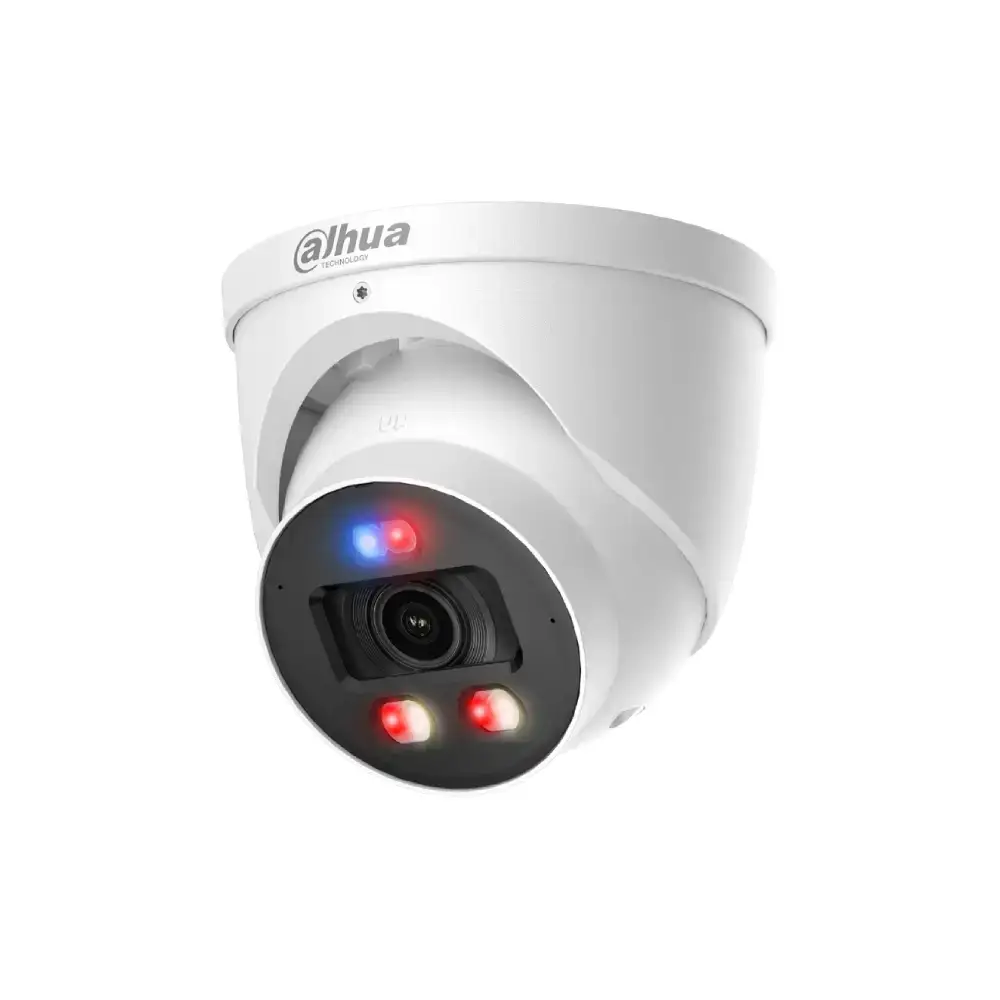
DAHUA IPC-HDW3649H-AS-PV-PRO-ANZ 6MP Smart Dual Light Active Deterrence Fixed-focal Eyeball WizSense Network Camera
Login to buy6MP WizColor TiOC PRO Fixed-focal Eyeball WizSense Network Camera
- 6-MP 1/1.8" CMOS image sensor, low luminance, and high definition image.
- Outputs max. 6 MP (3840 ×2160)@25/30 fps.
- H.265 codec, high compression rate, ultra-low bit rate.
- Built-in multi-core light, the max. IR distance is 30 m and the max. warm light distance is 30 m.
- ROI, SMART H.264+/H.265+, AI H.264/H.265, flexible coding, applicable to various bandwidth and storage environments.
- Rotation mode, WDR, 3D NR, HLC, BLC, digital watermarking, applicable to various monitoring scenes.
- Intelligent monitoring: Intrusion, tripwire (the two function support the classification and accurate detection of vehicle and human).
- Abnormality detection: Motion detection, privacy masking, scene changing, audio detection, no SD card, SD card full, SD card error, network disconnection, IP conflict, illegal access, and voltage detection.
- Alarm: 1 in, 1 out; audio: 1 in, 1 out; supports max. 512 G Micro SD card; built-in dual Mic; 1-ch speaker; support two-way talk.
- 12 VDC/PoE power supply.
- IP67 protection.
- Sound and light alarm (red and blue lights).
- SMD 4.0.
- Supports AI SSA and one-tap arming and disarming.
- SMD area can be set in warm light areas that support triggering alarms.
-
Vendor:
Dahua
- Tags: 6mp, Active deterrence, Tioc, Turret camera, Wizsense
Buying from us? You get more than just the product.
Free Pre-Programming
We can pre-configure eligible products so they're ready to install.
Free 45 Mins Onsite Support
Stuck on the job? We'll come to you. Eligible purchases include up to 45 minutes of onsite support.
Project Management
From plans to handover. We assist with design, equipment selection, programming and commissioning.
End-User Support
We help support your customers too. Give your customers the confidence with reliable local support.

- Description
Product Overview
Two things separate this camera from the standard TiOC, and both of them matter more than the model number suggests.
The first is the sensor. This carries a 1/1.8″ progressive scan CMOS — considerably larger than the 1/2.7″ format used in the standard model. A bigger sensor means physically larger pixels, more light gathered before any processing happens, and cleaner images in exactly the low-light conditions where security footage usually has to earn its keep. This is not a marketing tier; it is a genuine difference in the hardware doing the work.
The second is AcuPick. Paired with a Dahua 5-Series NVR, the camera generates appearance metadata as it records, so you can search footage for a specific person or vehicle by their characteristics rather than scrubbing a timeline. Anyone who has spent an afternoon looking for a two-minute incident understands what that saves.
Everything else is full TiOC: red and blue strobe with siren, two-way talk through dual microphones and a speaker, SMD 4.0 human and vehicle classification, perimeter protection zones, smart dual illumination for colour capture on detection, AI Scene Self-Adaptation, one-tap arming, IP67 sealing and PoE.
Key Capabilities
1/1.8″ Large-Format Sensor
The headline difference over the standard model. A 1/1.8″ sensor has substantially more surface area than the 1/2.7″ format common at this level, which means bigger pixels and more light captured before processing begins. Less digital gain is needed, so low-light images stay clean rather than dissolving into the smeary noise that ruins most night footage.
AcuPick AI Target Search
The camera generates appearance metadata as it records. On a Dahua 5-Series NVR you can then search recorded footage for a specific person or vehicle by their characteristics rather than working through a timeline. This turns an afternoon of review into a few seconds, which is the difference between footage you can actually use and footage you never get around to checking.
Active Deterrence: Strobe and Siren
Red and blue strobe lights with a built-in siren, triggered automatically when a person or vehicle is confirmed in a defined zone. The value is entirely in the timing — a response that fires while someone is still deciding whether to proceed is worth far more than a recording reviewed the next morning.
Two-Way Talk With Dual Microphones
Dual built-in microphones and a speaker let you speak directly to whoever is on site through the DMSS app from anywhere. Pre-recorded warnings can also play automatically on detection. Being addressed directly by a voice is a markedly stronger deterrent than an alarm tone alone.
SMD 4.0 and Perimeter Protection
Deep learning classification separates people and vehicles from animals, foliage and shadows, while tripwire and intrusion rules let you define exactly which boundaries matter. On a deterrence camera this accuracy is critical — it governs both your notifications and when the siren actually fires.
Smart Dual Illumination
Infrared and warm white LEDs working together. The camera runs infrared through ordinary night hours — dark and unobtrusive — then switches to warm light for full-colour capture the moment a target is confirmed. Colour evidence of the events that matter, without a light burning above the driveway all night.
AI Scene Self-Adaptation
AI SSA adjusts camera parameters in real time for backlight, flicker, rain and fog rather than holding a fixed profile. Combined with WDR, HLC, BLC and 3D noise reduction, it keeps image quality consistent across the changeable conditions that defeat cheaper cameras — wet roads, low winter sun, bright doorways.
One-Tap Arm and Disarm
Deterrence arms and disarms from the DMSS app in a single tap, or runs to a schedule. Strobe and siren active overnight and while the property is empty, quiet while the family is in the back yard. This is the feature that determines whether you still have deterrence enabled a month after installation.
IP67 Housing, AI Coding, PoE
Fully dust-tight and sealed against water for exposed eave, soffit and wall positions. Smart and AI H.265+/H.264+ coding analyses scene content to cut bitrate further again, keeping 6MP retention costs sensible. Runs on standard 802.3af PoE — one Cat6 run carries data, power, audio and alarm control together.
Best For
Where the 1/1.8″ sensor earns its price
AcuPick search saves hours per incident
Intervention rather than documentation
Zone rules plus verbal response
Response where nobody is nearby
Full AcuPick capability unlocked
Why Choose the Pro Over the Standard TiOC
Both cameras give you the same active deterrence — strobe, siren, two-way talk, AI classification, perimeter zones. If deterrence is all you need, the standard model does that job and costs less, and we will happily sell you one.
The Pro is worth the difference in two specific situations.
The first is a dark site. The 1/1.8″ sensor is a meaningfully larger piece of silicon than the 1/2.7″ in the standard model, and sensor size determines low-light performance more directly than any other single specification. On an unlit rural driveway, a rear boundary with no street lighting, or a yard where the nearest light is thirty metres away, that difference is the difference between usable footage and noise. If your site is well lit, you will see far less benefit.
The second is how often you actually go looking through footage. AcuPick generates appearance metadata as it records, so on a 5-Series NVR you search for a person or vehicle by characteristics instead of scrubbing hours of timeline. For a household that reviews footage twice a year this is a nice-to-have. For a business dealing with regular incidents, shrinkage, or insurance and police requests, it changes how much the system is worth having.
Total Security Equipment supplies genuine Dahua Australian stock from showrooms in Melbourne and Sydney, with 5-Series NVRs, brackets, storage and PoE gear on the shelf, trade accounts for installers, and local warranty handling. If you are not sure which of the two models suits your site, ask us — the honest answer is often the cheaper one.
Buyer Decision Tips
Key Features & Technical Specifications
|
Camera |
|||||||||||||||||||||||||||||||||||||||||||||||||||||||||||
|
Image Sensor |
1/1.8" CMOS |
||||||||||||||||||||||||||||||||||||||||||||||||||||||||||
|
Max. Resolution |
3288 (H) × 1850 (V) |
||||||||||||||||||||||||||||||||||||||||||||||||||||||||||
|
ROM |
256 MB |
||||||||||||||||||||||||||||||||||||||||||||||||||||||||||
|
RAM |
1 G |
||||||||||||||||||||||||||||||||||||||||||||||||||||||||||
|
Scanning System |
Progressive |
||||||||||||||||||||||||||||||||||||||||||||||||||||||||||
|
Electronic Shutter Speed |
Auto/Manual 1/3 s–1/100,000 s |
||||||||||||||||||||||||||||||||||||||||||||||||||||||||||
|
Min. Illumination |
0.0002 lux@F1.0(Color,30IRE) 0.0001 lux@F1.0(B/W,30IRE) 0 lux (Illuminator on) |
||||||||||||||||||||||||||||||||||||||||||||||||||||||||||
|
S/N Ratio |
>56 dB |
||||||||||||||||||||||||||||||||||||||||||||||||||||||||||
|
Illumination Distance |
Up to 30 m (98.43 ft) (IR) |
||||||||||||||||||||||||||||||||||||||||||||||||||||||||||
|
Illuminator On/Off Control |
Auto;Manual |
||||||||||||||||||||||||||||||||||||||||||||||||||||||||||
|
Illuminator Number |
2 (Multi-core (IR + warm) light) |
||||||||||||||||||||||||||||||||||||||||||||||||||||||||||
|
Angle Adjustment |
Pan: 0°–360° |
||||||||||||||||||||||||||||||||||||||||||||||||||||||||||
|
Lens |
|||||||||||||||||||||||||||||||||||||||||||||||||||||||||||
|
Lens Type |
Fixed-focal |
||||||||||||||||||||||||||||||||||||||||||||||||||||||||||
|
Lens Mount |
M16 |
||||||||||||||||||||||||||||||||||||||||||||||||||||||||||
|
Focal Length |
2.8 mm; 3.6 mm |
||||||||||||||||||||||||||||||||||||||||||||||||||||||||||
|
Max. Aperture |
F1.0 |
||||||||||||||||||||||||||||||||||||||||||||||||||||||||||
|
Field of View |
2.8 mm: H: 109°; V: 59°; D: 131° 3.6 mm: H: 93; V: 50°; D: 111 |
||||||||||||||||||||||||||||||||||||||||||||||||||||||||||
|
Iris Control |
Fixed |
||||||||||||||||||||||||||||||||||||||||||||||||||||||||||
|
Close Focus Distance |
2.8 mm: 3.2 m (10.50 ft) 3.6 mm: 4.4 m (14.44 ft) |
||||||||||||||||||||||||||||||||||||||||||||||||||||||||||
|
DORI Distance |
Lens |
Detect |
Observe |
Recognize |
Identify |
||||||||||||||||||||||||||||||||||||||||||||||||||||||
|
2.8 mm |
70.2 m (230.31 ft) |
28.1 m (92.19 ft) |
14.0 m (45.93 ft) |
7.0 m (22.97 ft) |
|||||||||||||||||||||||||||||||||||||||||||||||||||||||
|
3.6 mm |
85.6 m (280.84 ft) |
34.3 m (112.53 ft) |
17.1 m (56.10 ft) |
8.6 m (28.22 ft) |
|||||||||||||||||||||||||||||||||||||||||||||||||||||||
| DORI (Detect, Observe, Recognize, Identify) is a standard system (EN-62676-4) for defining the ability of a person viewing the video to distinguish persons or objects within a covered area. The numbers in this table do not reflect intelligent function distances. For intelligent function distances, refer to installation and commissioning manual/project design tool. | |||||||||||||||||||||||||||||||||||||||||||||||||||||||||||
|
Intelligence |
|||||||||||||||||||||||||||||||||||||||||||||||||||||||||||
|
IVS (Perimeter Protection) |
Intrusion, tripwire (the two functions support the classification and accurate detection of vehicle and human), stay detection, loitering detection. |
||||||||||||||||||||||||||||||||||||||||||||||||||||||||||
|
Face Detection(Full Image) |
Face detection; snapshot; snapshot optimization; optimal face snapshot upload; face enhancement; face snapshot set as face or one-inch photo; snapshot strategies (real-time snapshot, quality priority and optimization snapshot); face angle filter; optimization time setting. |
||||||||||||||||||||||||||||||||||||||||||||||||||||||||||
|
SMD |
SMD 4.0 |
||||||||||||||||||||||||||||||||||||||||||||||||||||||||||
|
AcuPick |
Uses deep learning algorithms and works with back-end devices to accurately match targets, such as people and motor vehicles, and search through live and recorded videos to quickly locate targets. |
||||||||||||||||||||||||||||||||||||||||||||||||||||||||||
|
AI SSA |
Adopt deep learning algorithms to adjust the parameters of the image to suit the conditions. |
||||||||||||||||||||||||||||||||||||||||||||||||||||||||||
|
Smart Search |
Work together with Smart NVR to perform refine intelligent search, event extraction and merging to event videos |
||||||||||||||||||||||||||||||||||||||||||||||||||||||||||
|
Video |
|||||||||||||||||||||||||||||||||||||||||||||||||||||||||||
|
Video Compression |
H.265; H.264; H.264H; H.264B; MJPEG (only supported by the sub stream) |
||||||||||||||||||||||||||||||||||||||||||||||||||||||||||
|
AI Coding |
AI H.265; AI H.264 *Includes smart codec technology, Smart H.265+ and Smart H.264+ |
||||||||||||||||||||||||||||||||||||||||||||||||||||||||||
|
Video Frame Rate |
Main stream: 3288 × 1850@(1 fps–25/30 fps) Third stream: 1920 × 1080@(1–25/30 fps) |
||||||||||||||||||||||||||||||||||||||||||||||||||||||||||
|
Stream Capability |
3 streams |
||||||||||||||||||||||||||||||||||||||||||||||||||||||||||
|
Resolution |
6M (3288 × 1850/3200 × 1800); 5M (2880 × 1620); 4M (2688 × 1520/2560 × 1440); 3M (2304 × 1296); 1080p (1920 × 1080); 720p (1280 × 720); D1 (704 × 576/704 × 480); VGA (640 × 480); CIF (352 × 288/352 × 240) |
||||||||||||||||||||||||||||||||||||||||||||||||||||||||||
|
Bit Rate Control |
CBR/VBR/ABR |
||||||||||||||||||||||||||||||||||||||||||||||||||||||||||
|
Video Bit Rate |
H.264: 3 kbps–16384 kbps; H.265: 3 kbps–16384 kbps |
||||||||||||||||||||||||||||||||||||||||||||||||||||||||||
|
Day/Night |
Auto(ICR)/Color/B/W |
||||||||||||||||||||||||||||||||||||||||||||||||||||||||||
|
BLC |
Yes |
||||||||||||||||||||||||||||||||||||||||||||||||||||||||||
|
HLC |
Yes |
||||||||||||||||||||||||||||||||||||||||||||||||||||||||||
|
WDR |
120 dB |
||||||||||||||||||||||||||||||||||||||||||||||||||||||||||
|
Scene Self-adaptation (SSA) |
Yes |
||||||||||||||||||||||||||||||||||||||||||||||||||||||||||
|
White Balance |
Auto; natural; street lamp; outdoor; manual; regional custom |
||||||||||||||||||||||||||||||||||||||||||||||||||||||||||
|
Gain Control |
Auto |
||||||||||||||||||||||||||||||||||||||||||||||||||||||||||
|
Noise Reduction |
3D NR |
||||||||||||||||||||||||||||||||||||||||||||||||||||||||||
|
Motion Detection |
OFF/ON (4 areas, rectangular) |
||||||||||||||||||||||||||||||||||||||||||||||||||||||||||
|
Region of Interest (RoI) |
Yes (4 areas) |
||||||||||||||||||||||||||||||||||||||||||||||||||||||||||
|
Smart Illumination |
Yes |
||||||||||||||||||||||||||||||||||||||||||||||||||||||||||
|
Smart Dual Light |
Yes |
||||||||||||||||||||||||||||||||||||||||||||||||||||||||||
|
Defog |
Yes |
||||||||||||||||||||||||||||||||||||||||||||||||||||||||||
|
Image Rotation |
0°/90°/180°/270° (Support 90°/270° with 2688 × 1520 resolution and lower) |
||||||||||||||||||||||||||||||||||||||||||||||||||||||||||
|
Mirror |
Yes |
||||||||||||||||||||||||||||||||||||||||||||||||||||||||||
|
Privacy Masking |
8 areas |
||||||||||||||||||||||||||||||||||||||||||||||||||||||||||
|
LDC |
Yes |
||||||||||||||||||||||||||||||||||||||||||||||||||||||||||
|
Audio |
|||||||||||||||||||||||||||||||||||||||||||||||||||||||||||
|
Built-in MIC |
Yes, built-in dual Mic |
||||||||||||||||||||||||||||||||||||||||||||||||||||||||||
|
Built-in Speaker |
Yes, built-in speaker Max power consumption: 2 W; max sound level at 10 cm: 110 dB * Test results from laboratory |
||||||||||||||||||||||||||||||||||||||||||||||||||||||||||
|
Audio Compression |
PCM; G.711a; G.711Mu; G.726; G.723 |
||||||||||||||||||||||||||||||||||||||||||||||||||||||||||
|
Alarm |
|||||||||||||||||||||||||||||||||||||||||||||||||||||||||||
|
Alarm Event |
No SD card; SD card full; SD card error; network disconnection; IP conflict; illegal access; motion detection; video tampering; tripwire; intrusion; stay detection; loitering detection; face detection (full image); scene changing; audio detection; voltage detection; SMD; security exception |
||||||||||||||||||||||||||||||||||||||||||||||||||||||||||
|
Network |
|||||||||||||||||||||||||||||||||||||||||||||||||||||||||||
|
Network Port |
RJ-45 (10/100 Base-T) |
||||||||||||||||||||||||||||||||||||||||||||||||||||||||||
|
SDK and API |
Yes |
||||||||||||||||||||||||||||||||||||||||||||||||||||||||||
|
Network Protocol |
IPv4; IPv6; HTTP; TCP; UDP; ARP; RTP; RTSP; RTCP; RTMP; SMTP; FTP; SFTP; DHCP; DNS; DDNS; QoS; UPnP; NTP; Multicast; ICMP; IGMP; NFS; SAMBA; PPPoE; SNMP; P2P; Bonjour; Auto Registration |
||||||||||||||||||||||||||||||||||||||||||||||||||||||||||
|
Interoperability |
ONVIF (Profile S & Profile G & Profile T & Profile M); CGI |
||||||||||||||||||||||||||||||||||||||||||||||||||||||||||
|
User/Host |
20 (Total bandwidth: 64 M) |
||||||||||||||||||||||||||||||||||||||||||||||||||||||||||
|
Storage |
FTP;SFTP; Micro SD card (support max. 512 GB); NAS |
||||||||||||||||||||||||||||||||||||||||||||||||||||||||||
|
Browser |
IE: IE11 |
||||||||||||||||||||||||||||||||||||||||||||||||||||||||||
|
Management Software |
Smart PSS Lite; DSS; DMSS; DoLynk Care |
||||||||||||||||||||||||||||||||||||||||||||||||||||||||||
|
Mobile Client |
iOS;Android |
||||||||||||||||||||||||||||||||||||||||||||||||||||||||||
|
Security |
Digest; WSSE; Account lockout; Security logs; IP/MAC filtering; Generation and importing of X.509 certification; Syslog; HTTPS; 802.1x; Trusted boot; Trusted execution; Trusted upgrade |
||||||||||||||||||||||||||||||||||||||||||||||||||||||||||
|
Certification |
|||||||||||||||||||||||||||||||||||||||||||||||||||||||||||
|
Certifications |
CE-LVD: EN 62368-1; |
||||||||||||||||||||||||||||||||||||||||||||||||||||||||||
|
Port |
|||||||||||||||||||||||||||||||||||||||||||||||||||||||||||
|
Audio Input |
1 channel (RCA port) |
||||||||||||||||||||||||||||||||||||||||||||||||||||||||||
|
Audio Output |
1 channel (RCA port) |
||||||||||||||||||||||||||||||||||||||||||||||||||||||||||
|
Alarm Input |
1 channel in: wet contact, 5 mA 3–5 VDC |
||||||||||||||||||||||||||||||||||||||||||||||||||||||||||
|
Alarm Output |
1 channel out: wet contact, 300 mA 12 VDC |
||||||||||||||||||||||||||||||||||||||||||||||||||||||||||
|
Power |
|||||||||||||||||||||||||||||||||||||||||||||||||||||||||||
|
Power Supply |
12 VDC; PoE |
||||||||||||||||||||||||||||||||||||||||||||||||||||||||||
|
Dual Power Backup |
When the power adapter and PoE provide power at the same time, disconnect one of them. The device will continue to work, but will not restart. |
||||||||||||||||||||||||||||||||||||||||||||||||||||||||||
|
Power Consumption |
Basic: 4.1 W (12 VDC); 6 W (PoE) Max. (H.265+WDR+ warm light+siren and light active deterrence + intelligence on): 8.2 W (12 VDC); 10 W (PoE) |
||||||||||||||||||||||||||||||||||||||||||||||||||||||||||
|
Environment |
|||||||||||||||||||||||||||||||||||||||||||||||||||||||||||
|
Operating Temperature |
–40 °C to +60 °C (–40 °F to +140 °F) |
||||||||||||||||||||||||||||||||||||||||||||||||||||||||||
|
Operating Humidity |
≤95% |
||||||||||||||||||||||||||||||||||||||||||||||||||||||||||
|
Protection |
IP67 |
||||||||||||||||||||||||||||||||||||||||||||||||||||||||||
|
Structure |
|||||||||||||||||||||||||||||||||||||||||||||||||||||||||||
|
Casing Material |
Metal |
||||||||||||||||||||||||||||||||||||||||||||||||||||||||||
|
Product Dimensions |
Φ122.0 mm × 116.1 mm (4.80" × Φ4.57") |
||||||||||||||||||||||||||||||||||||||||||||||||||||||||||
|
Net Weight |
0.8 kg (1.76 lb) |
||||||||||||||||||||||||||||||||||||||||||||||||||||||||||
|
Gross Weight |
1.0 kg (2.20 lb) |
||||||||||||||||||||||||||||||||||||||||||||||||||||||||||
Ideal Use Cases
Unlit Rural Driveways and Boundaries
This is where the larger sensor justifies the price difference. A driveway with no street lighting is exactly the condition that separates a good low-light camera from an adequate one, and it is also where response times are longest — so a camera that intervenes on its own with strobe, siren and voice is doing genuine work rather than just documenting.
Commercial Sites With Regular Incidents
Where footage gets reviewed weekly rather than yearly, AcuPick changes the economics. Searching for a specific person or vehicle by appearance rather than scrubbing a timeline turns each incident review from an hour into minutes — which compounds quickly across a year of insurance claims, disputes and police requests.
Yards, Plant and Equipment Storage
High-value equipment sitting unattended overnight is a standing target, and yards are usually too large to secure physically. An intrusion zone around the compound with deterrence armed after hours means anyone entering meets light and noise immediately, while you get a notification and can speak through the camera from wherever you are.
Closed Retail and Commercial Premises
Loitering and after-hours access at shopfronts, rear doors and loading areas is common and rarely worth attending in person. Two-way talk lets a manager address someone directly from home, which resolves most of these situations in seconds. The larger sensor also handles the uneven lighting typical of service laneways.
Sites Where You Need to Find Things Again
Most CCTV conversations focus on capture quality and almost none on retrieval, yet retrieval is where systems actually fail people. Footage exists, the incident is definitely on it somewhere, and nobody has four hours to find it — so it never gets found. AcuPick attacks that directly by tagging appearance metadata at the point of recording, so on a 5-Series NVR you ask the system for a person in a dark jacket, or a white van, and it brings back the matching clips. If your property generates enough activity that reviewing footage is a real job rather than a rare event, this is the feature to pay for.
Choosing the Right Model
Choose the Pro if…
- Your site is genuinely dark or unevenly lit — the 1/1.8″ sensor is the reason to buy this model.
- You review footage often enough that search speed matters.
- You have, or are buying, a Dahua 5-Series NVR so AcuPick actually works.
- You want active deterrence and the best low-light image in this range.
- The site is commercial, or high-value enough to justify the step up.
Choose a different model if…
- Your site is well lit and you just want deterrence. The standard HDW3649H-AS-PV-ANZ does the same job for less — and on a lit site you will barely see the sensor difference.
- You are not running a 5-Series NVR and do not plan to. AcuPick will sit unused.
- The camera is close to neighbours and a siren would cause more problems than it solves. A standard WizSense turret gives the same AI detection quietly.
- You want unbroken colour all night. That is a WizColor camera.
- You need adjustable framing or longer reach. The motorised varifocal TiOC offers zoom with the same deterrence.
- You need readable plates on moving vehicles. That is a dedicated ANPR job.
FAQs
What is the difference between this and the standard HDW3649H TiOC?
Two things. The Pro uses a 1/1.8″ sensor against the standard model's 1/2.7″ — a physically larger sensor that gathers more light and produces cleaner low-light images. And the Pro supports AcuPick, which lets you search recorded footage by target appearance when paired with a Dahua 5-Series NVR. The deterrence features, AI classification, perimeter zones and two-way talk are the same on both. If your site is well lit and you do not have a 5-Series recorder, the standard model is the sensible buy.
What is AcuPick and do I need a specific NVR?
AcuPick tags recorded targets with appearance metadata so footage can be searched by what someone or something looked like, rather than by scrubbing through time. The tagging happens at the camera, but the search interface lives in the recorder and requires a Dahua 5-Series NVR. On any other recorder the camera records normally and you simply do not get the search. Confirm your NVR before ordering if AcuPick is part of the reason you are choosing this model.
Why does sensor size matter if both cameras are 6MP?
Because resolution tells you how many pixels there are, not how much light each one collects. A 1/1.8″ sensor is physically larger than a 1/2.7″, so at the same 6MP each individual pixel is bigger and gathers more light. Less digital gain is needed to brighten the image, which means less noise. In daylight the two look similar; as light drops the larger sensor pulls ahead noticeably. On a dark site, sensor format is a better guide than megapixel count.
What is a TiOC camera?
TiOC stands for Three-in-One Camera — Dahua's term for combining full-colour imaging, AI detection and active deterrence in a single unit. The distinguishing element is the last one. Rather than only recording an event and notifying you, it responds to it with light, sound and the option of your voice.
Does active deterrence actually work?
For opportunistic intrusion, generally yes — opportunists depend on being unobserved and unhurried, and a strobe and siren removes both conditions in about two seconds. It is less relevant against someone specifically targeting a property who expects a response. Treat it as a strong first layer that resolves most casual incidents on its own, not as a replacement for locks, lighting and an alarm system.
Will the siren go off constantly?
Not if it is set up properly. Deterrence triggers on SMD 4.0 classification, so it responds to people and vehicles rather than animals, foliage or shadows, and perimeter zones narrow it further to specific areas. The two things that cause problems are zones drawn too wide — taking in a road or footpath — and leaving deterrence armed around the clock. Draw tightly, arm on a schedule, and it fires when it should.
Can I turn the deterrence off when we are home?
Yes — one tap in the DMSS app disarms it, and it can also run to a schedule. Recording and AI classification continue regardless; only the alarm response is suspended. Most people run it armed overnight and while the property is empty, and disarmed during normal household hours.
Does it record in colour all night?
It records colour when something is detected. The camera runs infrared through ordinary night hours and switches to warm white light — giving full colour — when SMD 4.0 confirms a person or vehicle. That is deliberate: colour of the events that matter, without a white light burning above your driveway all night. If you want an unbroken colour record regardless of activity, look at WizColor instead.
Are there legal issues with the audio or the strobe?
Two things worth checking. Audio recording is governed by state and territory surveillance device legislation restricting recording of private conversations — in Victoria that is the Surveillance Devices Act 1999. A speaker adds a further dimension in shared or public-facing spaces, so signage matters and legal advice is sensible for workplaces or publicly accessible sites. Separately, a siren near residential neighbours may fall under local council noise provisions, so check your council's requirements before installing.
Is IP67 enough for exposed Australian conditions?
Yes. IP67 means fully dust-tight and rated against temporary water immersion, covering rain, hose spray, humidity, coastal salt and inland dust on permanent external mounting. The rating applies to the camera body — seal the cable entry and use a weatherproof junction box for any termination, because that join rather than the housing is where outdoor failures almost always start.
Where can I buy it and what support is included?
Available from Total Security Equipment online and across both showrooms, with Australia-wide shipping and compatible Dahua NVRs including 5-Series recorders, brackets, junction boxes and PoE gear in stock. Trade accounts and volume pricing are available for installers, and our team can help with zone setup, deterrence scheduling and NVR pairing so the camera works properly from day one.
Additional Information
Showrooms
Melbourne
26 Davies Ave., Sunshine North, VIC 3020
Sydney
38 Lisbon St., Fairfield East, NSW 2165
Ordering & Support
- Australia-wide shipping
- Genuine Dahua Australian stock with local warranty support
- Dahua 5-Series NVRs in stock — required for AcuPick search
- Brackets, junction boxes, storage and PoE gear available
- Trade accounts and volume pricing for installers
- Phone support on zone setup, deterrence scheduling and NVR pairing
- Download Spec Sheet
Not sure whether you need the Pro or the standard TiOC? Call 03 9079 5566 or visit a showroom — if your site is well lit and you are not running a 5-Series NVR, we will tell you to save the money.