SKU:DS-2CD2166G2-ISU
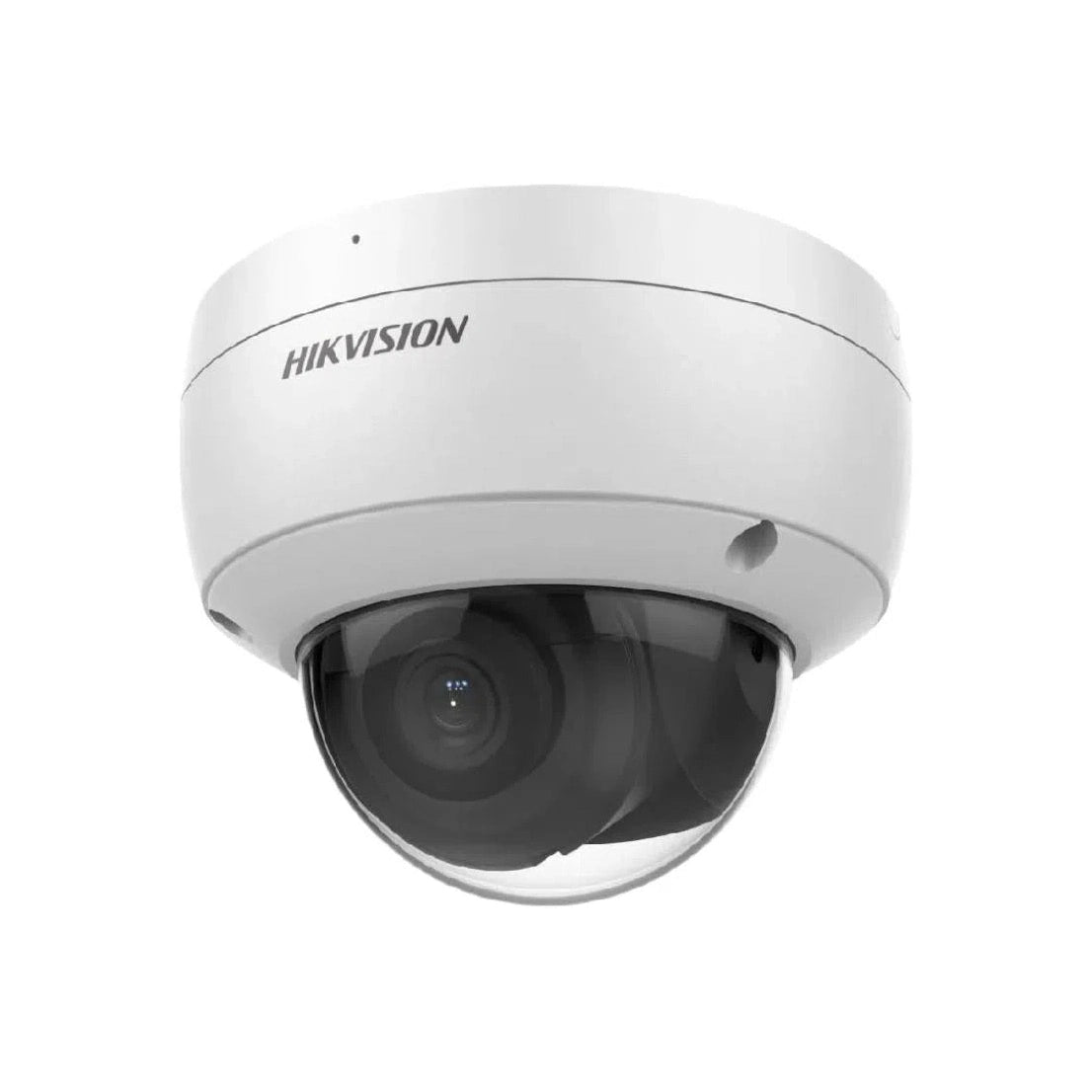
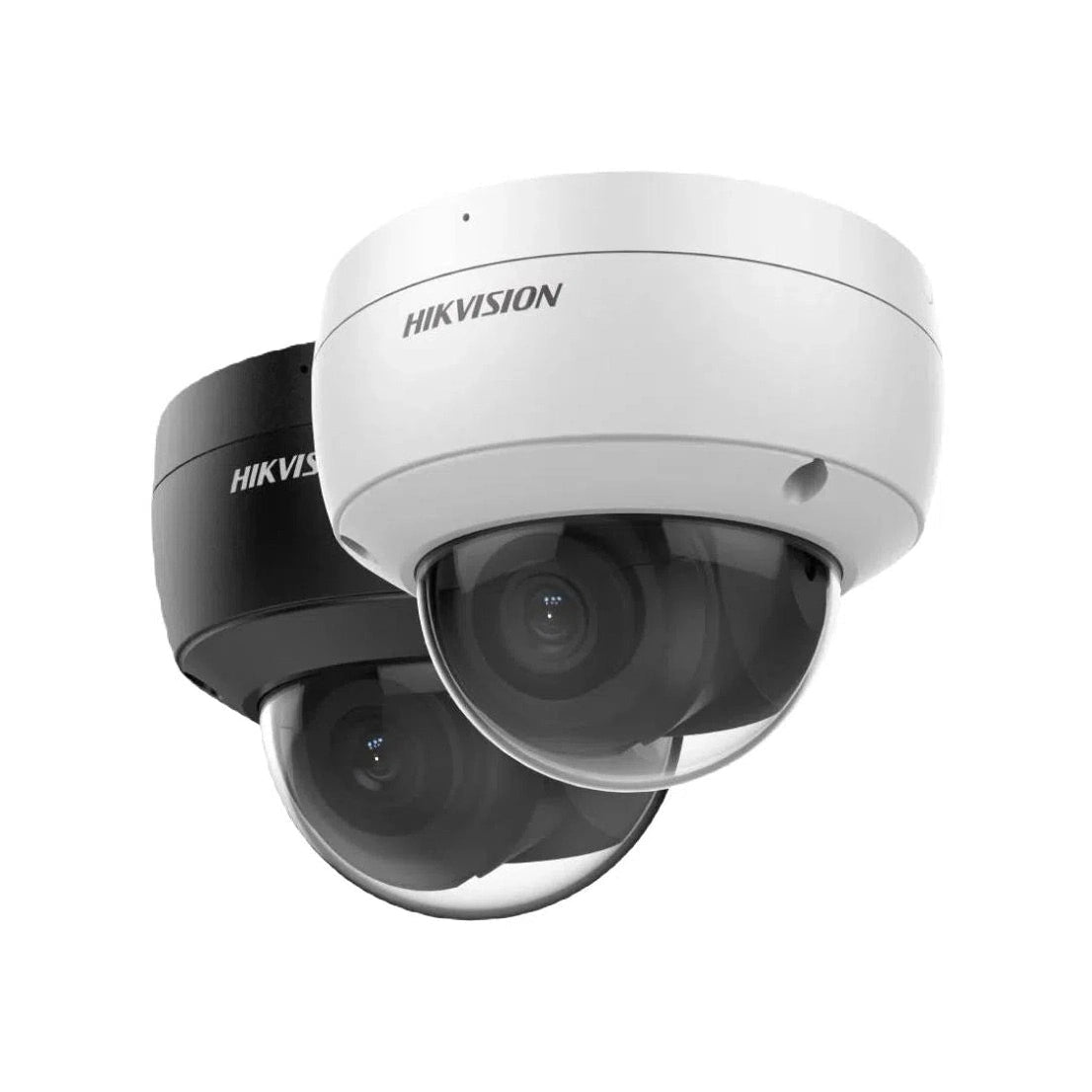
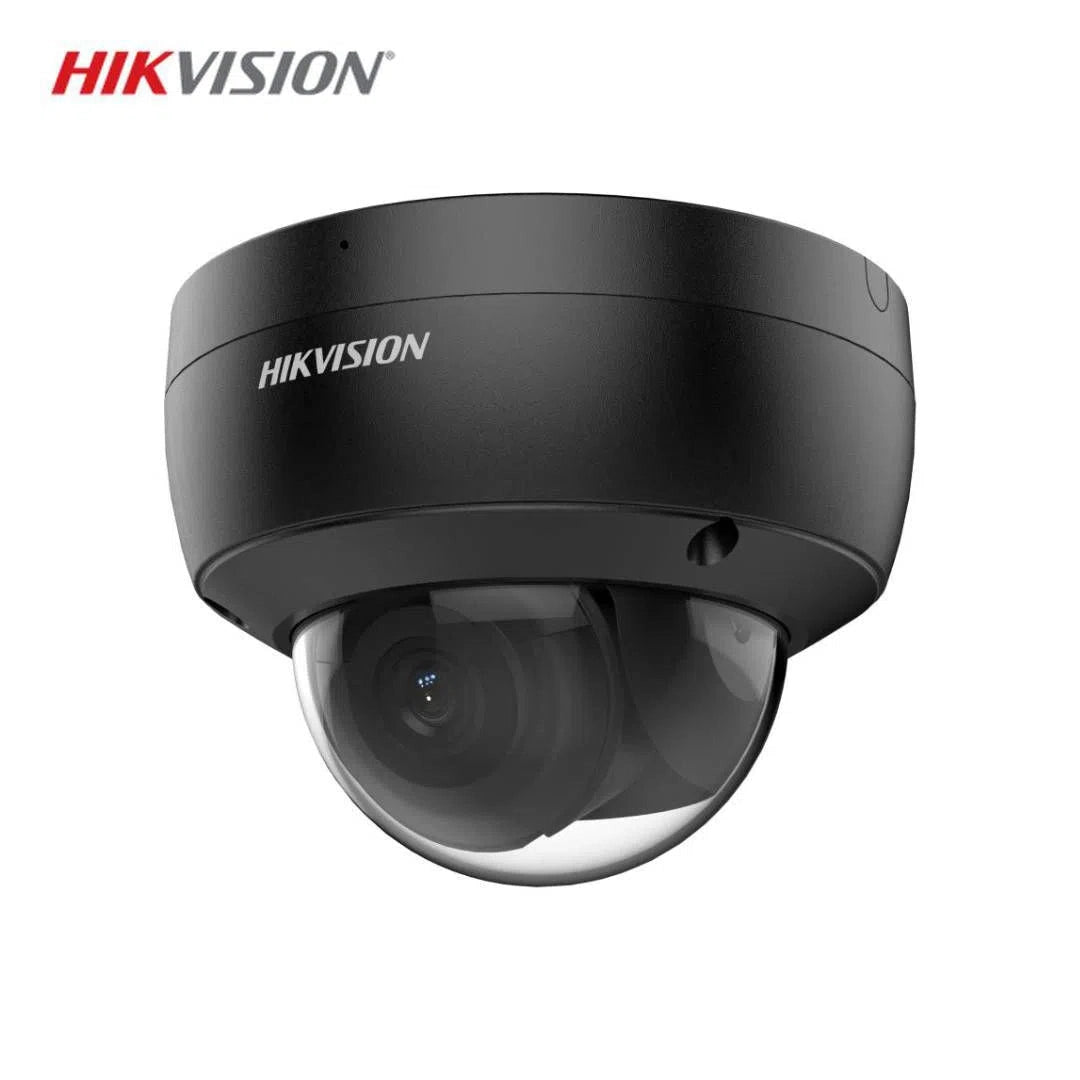
Hikvision 6MP DS-2CD2166G2-ISU AcuSense Fixed Dome 2.8mm
Features:
- High quality imaging with 6 MP resolution
- Excellent low-light performance via powered-by-DarkFighter technology
- Efficient H.265+ compression technology
- Clear imaging against strong back light due to 120 dB true WDR technology
- Focus on human and vehicle targets classification based on deep learning
- Built-in microphone for real-time audio security (-SU)
- Audio and alarm interface available(-SU)
- Water and dust resistant (IP67) and vandal resistant (IK10)
-
Vendor:
HIKVision
- Tags: 6mp, Acusense, Dome camera, New arrival, Offers
- Description
Product Overview
There is one situation where the housing matters more than anything inside it: when someone might deliberately try to break the camera.
The Hikvision DS-2CD2166G2-ISU is built for exactly that. It carries an IK10 impact rating — the highest in the international scale — alongside IP67 weather sealing, in a low-profile dome that offers almost nothing to grab, twist or lever. Where a turret on an arm can be knocked out of alignment with one shove, this sits flush and takes a hit.
Inside is a properly specified 6MP camera rather than a compromise made for the sake of the housing: powered-by-DarkFighter low-light imaging, 120 dB true WDR for backlit entrances, AcuSense deep-learning human and vehicle classification to keep alerts credible, H.265+ compression, and a built-in microphone with audio and alarm interface.
It suits the positions where cameras actually get attacked — walls at reach height, school corridors, public laneways, car park stairwells, licensed premises, transport sites and anywhere a camera has been damaged before. Available in white or black with a 2.8 mm lens.
What IK10 Actually Means
IP and IK ratings get quoted together and mean completely different things. Both matter, and most cameras only have one of them.
IP67 — protection from the weather
Fully dust-tight and sealed against water immersion. This covers rain, hose spray, humidity, coastal salt and inland dust. Nearly every outdoor camera has an IP rating, and it says nothing about physical strength — an IP67 camera can be perfectly weatherproof and still break if someone hits it.
IK10 — protection from people
The highest impact rating in the IEC 62262 scale, certifying the housing against a substantial deliberate strike. This is what stops a camera being disabled with a thrown object, a kick, or a swing from something heavy. Far fewer cameras carry an IK rating at all, and most that do sit below IK10.
Why it matters practically: a camera that gets broken is not a camera. On any position where someone might reasonably want it gone — a public-facing wall at head height, a school, a laneway, a stairwell, licensed premises — the impact rating is doing more real work than any imaging specification. If you have already had a camera damaged at a location, that is the clearest possible signal that this is the housing you need there.
Key Capabilities
IK10 Vandal-Resistant Housing
Certified to the highest impact rating in the international scale. Combined with the low-profile dome shape — which gives almost nothing to grip, twist or lever — this is a camera designed to survive a deliberate attempt to disable it, not just an accidental knock.
Powered-by-DarkFighter Low Light
Hikvision's low-light imaging technology, which holds usable colour at light levels where a standard camera has already switched to greyscale. Colour is the first descriptor anyone asks for after an incident, so extending the window where it is available is worth real money on a poorly lit site.
AcuSense Human and Vehicle Classification
Deep learning decides whether motion came from a person, a vehicle, or something you do not care about — before any alert is sent. Foliage, rain, pets and wildlife are filtered out. This is the feature that determines whether you are still reading notifications six months from now or muted them in week two.
6MP Resolution
Enough pixel density to crop hard into a recorded frame and still resolve something identifiable, which is what turns footage into evidence. On the kind of site that needs a vandal-rated camera, the incidents you are recording are exactly the ones that tend to need following up.
120 dB True WDR
True wide dynamic range balances exposure across bright and dark areas in the same frame — the feature that saves the shot of someone standing in a doorway with bright sky behind them. On entrances, foyers and glass-fronted premises this is the difference between a usable face and a black outline.
Built-In Microphone
Records ambient audio alongside video, which frequently supplies the context a fixed camera angle leaves out — a verbal exchange at a counter or an entrance, an impact you would otherwise be guessing at. Note the legal considerations covered in the buyer tips before enabling it.
Audio and Alarm Interface
Alarm input and output terminals, which most cameras at this level omit entirely. The output can trigger an external siren, strobe or relay on detection; the input lets a beam, door contact or existing alarm panel trigger camera recording. On a commercial site with security infrastructure already installed, this lets the camera participate rather than run in parallel.
Low-Profile Dome Form
Sits close to the mounting surface with no protruding arm, which serves two purposes: there is nothing convenient to grab or lever, and the camera is visually unobtrusive in spaces where a bulky housing would be out of place — foyers, retail interiors, apartment common areas.
H.265+ Compression
Compresses substantially harder than H.264 for the same picture quality, which extends how far back your recorder history reaches on the same drive and reduces the bandwidth each camera consumes on a shared NVR budget. Meaningful across a multi-camera commercial install.
Dome or Turret — Which Should You Choose?
Most of our cameras are turrets. This is a dome, and the difference is worth understanding because it affects where each works best.
Domes are better for…
- Vandal resistance. IK10 rating and a shape with nothing to grab or lever.
- Reachable positions. Walls at head height, corridors, stairwells, public areas.
- Discreet installations. Low profile, less visually intrusive indoors.
- Ambiguous aim. Harder to tell exactly where a dome is pointing from a distance.
Turrets are better for…
- Night image clarity. No dome bubble means no risk of infrared reflecting back into the lens.
- Easier aiming. The head repositions freely without working around a bubble.
- Lower maintenance. No bubble to haze, scratch or need cleaning.
- Out-of-reach positions. Where vandalism is not a realistic risk, a turret is simpler.
The straightforward rule: if the camera is somewhere a person could reach it and might want to disable it, choose the vandal dome. If it is under an eave three metres up on a private property, a turret is simpler and avoids the dome bubble entirely. Both use the same imaging platform here, so you are choosing a housing rather than compromising on picture quality.
Best For
IK10 where a turret would be knocked
Impact rating and discreet profile
Vandal resistance plus low-light imaging
Built to survive the difficult nights
Alarm I/O integrates the two
The clearest signal you need IK10
Why Choose the DS-2CD2166G2-ISU
The honest question is why pay for a vandal-rated housing when a turret with the same sensor costs less. The answer is entirely about where the camera is going.
If the position is out of reach, it is not worth it — and we will tell you that. A camera under an eave three metres up on a private driveway has no realistic vandalism exposure, and a turret does the same imaging job for less money with a simpler installation.
If the position is reachable, it is worth it every time. A camera that gets disabled produces no evidence at all, which makes every other specification irrelevant. On a wall at head height, in a school corridor, in a stairwell, on a public laneway or at licensed premises, the impact rating is doing more practical work than resolution, low-light performance or AI ever will. And a camera that visibly resists being interfered with tends not to get interfered with.
What you are not doing is trading away image quality to get the housing. This runs the same imaging platform as the equivalent turret models — DarkFighter low light, 120 dB WDR, AcuSense classification, 6MP resolution. The alarm input and output terminals are a genuine addition too, letting the camera trigger an external siren or take a signal from an existing alarm panel rather than running as a separate system.
Total Security Equipment supplies genuine Hikvision Australian stock from showrooms in Melbourne and Sydney, with compatible NVRs, brackets, junction boxes and PoE gear on the shelf, trade accounts for installers, and local warranty handling.
Buyer Decision Tips
Key Features & Technical Specifications
| Model | DS-2CD2166G2-ISU |
| Camera Type | 6MP AcuSense vandal-resistant fixed dome |
| Resolution | 6MP |
| Image Sensor | [CONFIRM SENSOR SIZE FROM DATASHEET] |
| Lens | 2.8 mm fixed |
| Low Light | Powered-by-DarkFighter technology |
| IR Range | [CONFIRM FROM DATASHEET] |
| Wide Dynamic Range | 120 dB true WDR |
| Analytics | AcuSense — human and vehicle classification via deep learning |
| Audio | Built-in microphone (-SU) |
| Alarm Interface | Audio and alarm input/output available (-SU) |
| Video Compression | H.265+ / H.265 / H.264+ / H.264 |
| Ingress Protection | IP67 — dust-tight and water resistant |
| Impact Protection | IK10 — highest impact rating (IEC 62262) |
| Colour Options | White or black |
| Power | PoE — [CONFIRM CLASS AND WATTAGE] |
Ideal Use Cases
Schools and Public Buildings
Corridors, entrances, bike sheds and grounds where cameras are within reach and interference is a realistic possibility. The IK10 housing survives what a turret would not, and the low profile is considerably less confrontational in a space people use every day than a camera on a visible arm.
Car Parks and Stairwells
Permanently dim, frequently unsupervised, and often within arm's reach on a low ceiling. This combination of DarkFighter low-light imaging and a vandal-rated housing is specifically what these positions need — and stairwells in particular are where cameras get attacked most.
Licensed Premises and Late-Night Venues
Entrances, smoking areas and exits at venues where incidents happen and cameras occasionally become a target. 120 dB WDR handles the bright-doorway contrast, AcuSense keeps the alert list credible, and the housing survives the nights that matter most.
Apartment and Strata Common Areas
Lobbies, lifts, bin areas and mail rooms are usually at reach height and generate disputes as often as incidents. The discreet dome profile suits shared residential spaces where residents object to obvious surveillance hardware, while the impact rating covers the reality of shared access.
The Position Where a Camera Has Already Been Damaged
This is the clearest case of all, and it comes up more often than people expect. A camera gets knocked off a wall, or the lens gets sprayed, or someone twists it to face the sky — and the replacement goes back in exactly the same housing that failed the first time. The site has already told you what it needs. If a location has damaged a camera once, it will do it again, and a vandal-rated dome fixed properly into solid substrate is the answer rather than a third replacement. Worth pairing with security screws and a proper back box; the housing rating only works if what it is attached to holds.
Choosing the Right Model
Choose this model if…
- The camera is within reach and could realistically be interfered with.
- A camera has already been damaged at this position.
- You need a discreet, low-profile housing for an interior or shared space.
- You have an existing alarm system and want the camera wired into it.
- The area is poorly lit and DarkFighter imaging matters.
- You are building on Hikvision recorders and want full event integration.
Choose a different model if…
- The position is out of reach. A turret with the same sensor costs less and avoids the dome bubble entirely.
- You want active deterrence. The ISU/SL turret adds a strobe and speaker for warning people off.
- You want the simplest possible night image. A turret has no bubble and therefore no reflection risk at all.
- You need to adjust framing after mounting. Fixed lens — a varifocal gives on-site flexibility.
- You need readable plates on moving vehicles. That is a dedicated ANPR job.
- You need colour footage right through the night. ColorVu keeps colour running with a permanent white light.
FAQs
What does IK10 mean, and is it different from IP67?
They cover completely different things. IP67 is weather protection — dust-tight and sealed against water. IK10 is impact protection, the highest rating in the IEC 62262 scale, certifying the housing against a substantial deliberate strike. Most outdoor cameras have an IP rating; far fewer carry an IK rating at all. A camera can be perfectly weatherproof and still break if someone hits it, which is why both matter on a public-facing position.
Should I choose a dome or a turret?
Ask whether a person could reach the camera. If yes — a wall at head height, a corridor, a stairwell, a public area — choose the vandal dome, because a camera that gets disabled produces nothing regardless of how good the sensor is. If the camera is under an eave three metres up on a private property, a turret is simpler, cheaper and avoids the dome bubble entirely. Both use the same imaging platform, so you are choosing a housing rather than compromising on picture quality.
Why does my dome camera look hazy or white at night?
Almost always because the foam gasket inside the dome is not seated properly against the bubble. Infrared light escapes past the gasket, reflects off the inside of the bubble and bounces straight back into the lens, washing the image out. It looks exactly like a faulty camera and it is not — it is a two-minute fix. Check the gasket sits flush all the way around the lens before fitting the bubble. A scratched or hazy bubble produces the same effect, so keep it clean and undamaged.
How do I clean the dome bubble?
Soft microfibre cloth and a mild solution only. Never use paper towel, solvents or anything abrasive — scratches on a dome bubble are permanent and they scatter infrared at night, producing the same white haze as a badly fitted gasket. A bubble that has hazed with salt film or dust degrades the image gradually enough that nobody notices until they compare it with new footage, so it is worth including in routine maintenance.
What does AcuSense do?
It uses deep learning to classify targets as human or vehicle on the camera itself, before an alert is sent. Foliage, rain, shadows, pets and wildlife are filtered out. Two benefits follow: notifications stay credible enough that you keep reading them, and recorded footage becomes searchable by target type, so reviewing an overnight period takes minutes rather than hours.
Can it trigger my existing alarm system?
Yes — that is what the alarm output terminal is for. It can fire an external siren, strobe or relay when the camera classifies a person or vehicle, letting you put the response wherever it is actually useful rather than at the camera. The alarm input works the other way: a beam, door contact or panel output can trigger camera recording and events. Plan the wiring during installation rather than retrofitting it afterwards.
Is the IK10 rating enough on its own?
The rating covers the camera housing, not the wall it is attached to. A vandal-rated dome fixed to plasterboard with the supplied plugs will come off the wall long before the housing fails. Fix into solid substrate with appropriate fasteners, use security screws where the risk is genuine, and use a proper back box or junction box where the cable enters. The housing rating only delivers what the mounting allows it to.
Does it record in colour at night?
DarkFighter technology holds colour to a very low light level, so the camera stays in colour far longer than most as light fades. In genuine darkness it switches to infrared and records greyscale. If you need unbroken colour footage all night regardless of conditions, that is a ColorVu camera with a permanent white light rather than this one.
Is it legal to record audio in Australia?
Surveillance device laws are set at state and territory level and they differ meaningfully. As a general principle, recording private conversations without any party's knowledge is restricted. Entrances, external perimeters, yards and commercial premises with clear signage are usually the appropriate places to enable audio. Check the legislation applying in your state — in Victoria this is the Surveillance Devices Act 1999 — before switching the microphone on, and seek legal advice where the site is a workplace, shared or publicly accessible.
Will it work on a non-Hikvision NVR?
Video recording will generally work over ONVIF. AcuSense classification, searchable analytic events and alarm linkage depend on the recorder understanding Hikvision events, which in practice means a compatible Hikvision NVR. Since those features are a good part of the reason to choose this camera, pairing it accordingly is sensible — send us your recorder model and we will confirm.
Where can I buy it and what support is included?
Available from Total Security Equipment online and across both showrooms, with Australia-wide shipping and compatible Hikvision NVRs, brackets, junction boxes and PoE gear in stock. Trade accounts and volume pricing are available for installers, and our team can advise on mounting, alarm I/O wiring and NVR compatibility before you order.
Additional Information
Melbourne HQ
26 Davies Ave., Sunshine North, VIC 3020
03 9079 5566
Sydney Branch
38 Lisbon St., Fairfield East, NSW 2165
02 8722 0348
Ordering & Support
- Australia-wide shipping
- Genuine Hikvision Australian stock
- Available in white or black
- Junction boxes, back boxes and brackets in stock
- Trade accounts and volume pricing
- Phone support on mounting and alarm I/O wiring
- Download Spec Sheet
Not sure whether you need a vandal dome or whether a turret would do? Call our Melbourne team on 03 9079 5566 or Sydney on 02 8722 0348 — tell us where the camera is going and how high, and we will tell you honestly which housing suits.