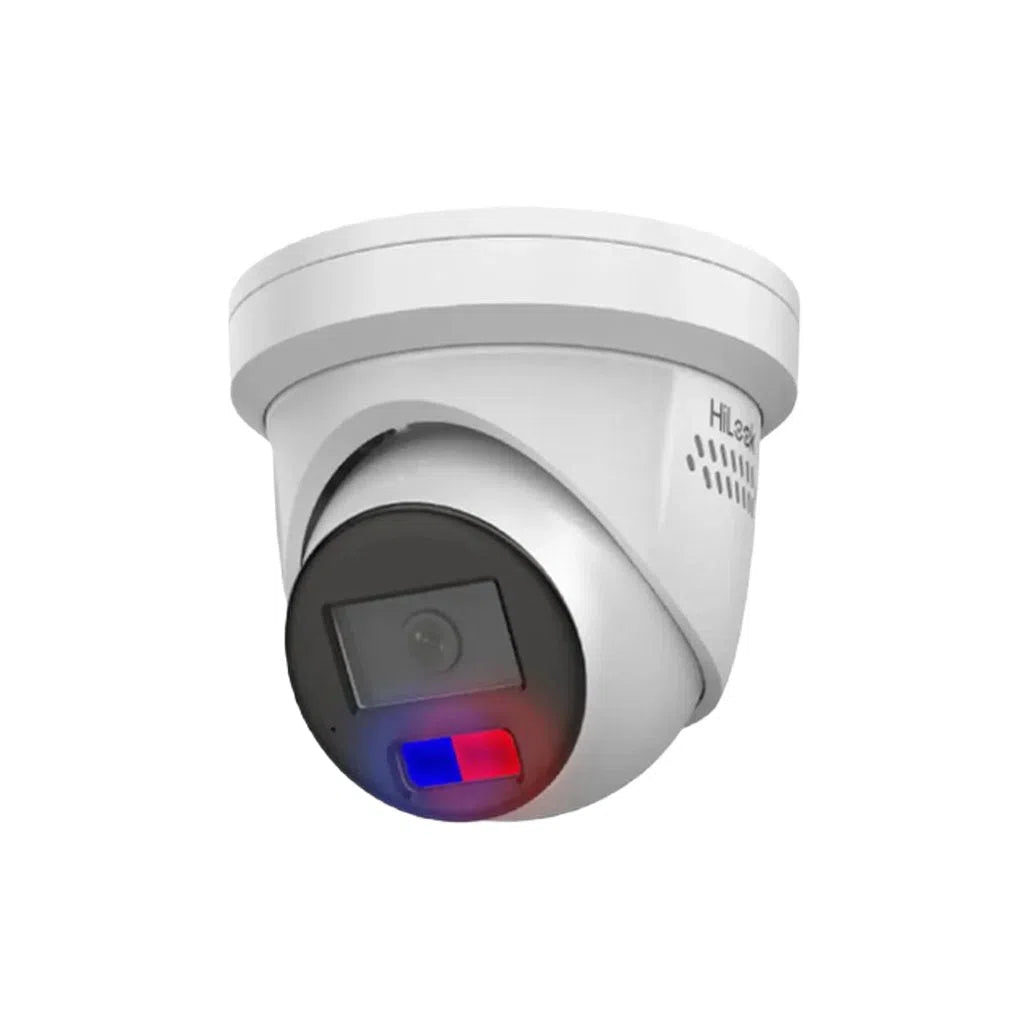
SKU:IPC-T269H-MU/SL
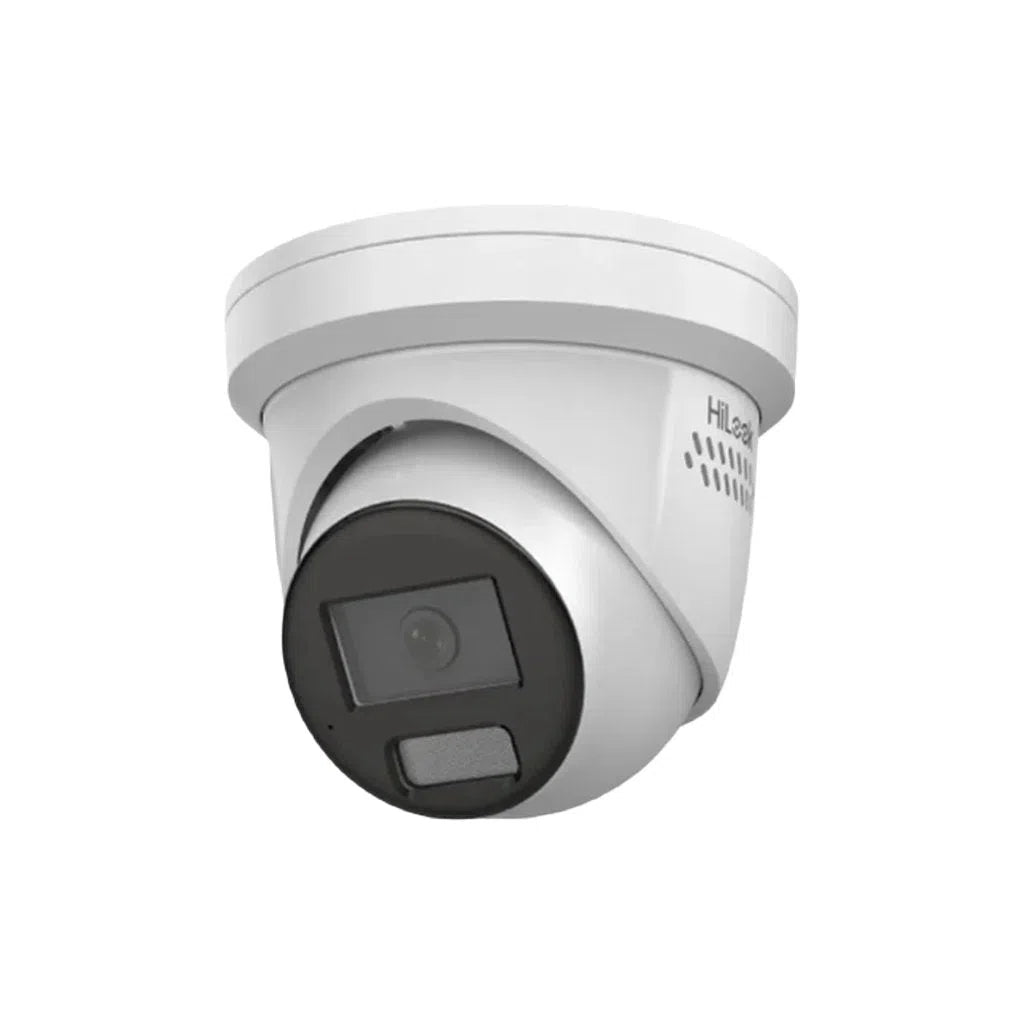
HiLook 6MP IPC-T269H-MU/SL TiOC Fixed Turret Network Camera
Login to buyFeatures:
- High quality imaging with 6 MP resolution
- Efficient H.265+ compression technology
- Clear imaging against strong back light due to 120 dB true WDR technology
- Human and vehicle targets classification based on deep learning
- Active red and blue strobe light and audio alarm to warn intruders off
- Provide real-time security via built-in two-way audio
- 24/7 colorful imaging
- Smart Dual -light Supplement,auto switch IR to White light supplement when event triggered
- Water and dust resistant (IP67)
-
Vendor:
HiLook
- Tags: 6mp, Active deterrence, New arrival, Offers, Turret camera
Buying from us? You get more than just the product.
Free Pre-Programming
We can pre-configure eligible products so they're ready to install.
Free 45 Mins Onsite Support
Stuck on the job? We'll come to you. Eligible purchases include up to 45 minutes of onsite support.
Project Management
From plans to handover. We assist with design, equipment selection, programming and commissioning.
End-User Support
We help support your customers too. Give your customers the confidence with reliable local support.

- Description
Product Overview
A standard camera tells you what happened. This one tries to stop it — and it does so at a price that puts active deterrence within reach of a normal residential budget.
The HiLook IPC-T269H-MU/SL is an all-in-one turret combining surveillance, AI detection and an active response. When deep learning classification confirms a person or vehicle in a monitored area, red and blue strobe lights fire and an audio alarm sounds. Through the mobile app you can speak directly to whoever is there, or set a custom recorded warning to play automatically. Most opportunistic intruders leave within seconds of that happening.
The camera underneath is well specified for the money: 6MP resolution on a large 1/2.4″ sensor, 120 dB True WDR for backlit entrances, smart dual illumination combining infrared with a white light supplement for colour capture on detection, H.265+ compression, IP67 sealing and PoE. Available with a 2.8 mm or 4 mm fixed lens.
One thing to know before you order: the two-way audio and arming functions require a compatible HiLook NVR. They are not fully supported on a Hikvision recorder. See the first buyer tip below — it matters.
Key Capabilities
Red and Blue Strobe Alarm
Motion-triggered strobe lighting that fires when a person or vehicle is detected in a monitored area. The point is the timing — a visible reaction while someone is still deciding whether to continue is worth far more than footage you review the following morning.
Audio Alarm With Custom Messages
An audible alarm sounds alongside the strobe, and you can record your own warning message through the mobile app rather than being stuck with a generic siren. A specific spoken warning tends to land harder than a tone, because it makes clear someone is actually watching.
Two-Way Audio
A built-in microphone and speaker let you listen and speak live through the app from anywhere. Useful well beyond security — talking to a delivery driver, checking on someone at the gate. Note this feature requires a compatible HiLook NVR; see the buyer tips.
Deep Learning Human and Vehicle Detection
AI classification separates people and vehicles from animals, foliage and shadows before anything triggers. On a deterrence camera this accuracy is critical — it controls your notifications and it decides when the siren fires. A camera that alarms at possums becomes a neighbourhood complaint quickly.
One-Tap Arm and Disarm
Deterrence can be armed and disarmed from the HiLook mobile app in a single tap, so the strobe and alarm run overnight and while the property is empty but stay quiet during normal household hours. This is the feature that determines whether you still have deterrence enabled a month after installation.
6MP on a 1/2.4″ Sensor
A larger sensor format than most cameras at this price, which means bigger individual pixels and better light gathering rather than simply a higher number on the box. The resolution gives crop headroom during review — enough image data left when you zoom into the corner where something happened.
Smart Dual-Light Supplement
Infrared and white light LEDs, both reaching 30 m. The camera runs infrared through ordinary night hours and switches to white light for colour capture when an event is triggered — so you get colour footage of the incident without a light burning above the driveway from dusk to dawn.
120 dB True WDR
Balances exposure across bright and dark areas in the same frame, which is what saves the shot of someone standing in a doorway with sky behind them. On glass-fronted shops and west-facing entries this single feature is the difference between a usable face and a black outline.
IP67 Housing, H.265+, PoE
Fully dust-tight and sealed against water for exposed eave, soffit and wall positions. H.265+ compression keeps 6MP storage demands reasonable, and PoE means one Cat6 run carries data, power, audio and alarm control together with no plug pack at the camera.
Best For
Intervention rather than documentation
Reacts before a vehicle is entered
Active response at a value-tier price
Speak to loiterers without attending
Custom voice warning on detection
Full feature set on a HiLook NVR
Why Choose the IPC-T269H-MU/SL
Most people who buy a security camera end up having the same experience at least once: watching clear footage of someone walking around their property, knowing precisely what happened, and knowing there was nothing to be done about it at the time. The recording is perfect and completely useless.
Active deterrence closes that gap, and until recently it meant stepping up to a premium camera. This is the value-tier version of that capability — strobe, audio alarm, custom voice warnings and live two-way talk, at a price that makes it realistic to put one on every entry point rather than agonising over a single premium unit.
The thing that makes it workable is the AI. Deterrence is only tolerable if it fires at the right things; an alarm triggered by cats and wind is a camera you disable within a fortnight and a problem with the neighbours besides. Deep learning classification means people and vehicles trigger the response and background movement does not.
Where it sits against a premium alternative like the Dahua TiOC comes down to imaging and integration — the Dahua carries a wider aperture and stronger low-light figures. If your site is genuinely dark, that difference is real and worth paying for. If it is reasonably lit and you want deterrence across several positions, this is the sensible buy. We are happy to tell you which situation you are in.
Total Security Equipment stocks HiLook across our Melbourne and Sydney showrooms with compatible NVRs, brackets, storage and PoE gear, trade accounts for installers, and local warranty support.
Buyer Decision Tips
Key Features & Technical Specifications
| Category | Parameter | Details |
| Camera | Image Sensor | 1/2.4" Progressive Scan CMOS |
| Max. Resolution | 3200 × 1800 | |
| Min. Illumination | Color: 0.003 Lux @ (F1.6, AGC ON), 0 Lux with white light; B/W: 0 Lux with IR | |
| Shutter Time | 1/3 s to 1/100,000 s | |
| Day & Night | IR cut filter | |
| Angle Adjustment | Pan: 0° to 360°, tilt: 0° to 75°, rotate: 0° to 360° | |
| Lens | Lens Type | Fixed lens, 2.8, 4, and 6 mm optional |
| Iris Type | Fixed | |
| Focal Length & FOV |
2.8 mm: Horizontal 105°, Vertical 55°, Diagonal 127° 4 mm: Horizontal 78°, Vertical 38°, Diagonal 96° 6 mm: Horizontal 51°, Vertical 26°, Diagonal 59° |
|
| Aperture | F1.6 | |
| Lens Mount | M12 | |
| Illuminator | Light Type | White light & IR |
| Light Range | IR Range: Up to 30m; White light Range: Up to 30m | |
| Smart Supplement | Yes | |
| Video | Main Stream | 50 Hz: 25 fps; 60 Hz: 30 fps (3200 × 1800 to 1280 × 720) |
| Sub-Stream | 50 Hz: 25 fps; 60 Hz: 30 fps (640 × 480, 640 × 360) | |
| Third Stream | 50 Hz/60 Hz: 10 fps (1920 × 1080 to 640 × 360) | |
| Compression | Main: H.265+/H.265/H.264+/H.264; Sub: H.265/H.264/MJPEG; Third: H.265/H.264 | |
| Video Bit Rate | 32 Kbps to 16 Mbps | |
| ROI | 1 fixed region(s) for main stream and sub-stream | |
| Audio | Environment Noise Filtering | Yes |
| Audio Sampling Rate | 8 kHz/16 kHz/32 kHz/44.1 kHz/48 kHz | |
| Audio Compression | G.711ulaw/G.711alaw/G.722.1/G.726/MP2L2/PCM/MP3/AAC | |
| Audio Bit Rate | 64 Kbps (G.711) to 320 Kbps (MP3) | |
| Network | Protocols | TCP/IP, ICMP, HTTP, HTTPS, FTP, DHCP, DNS, DDNS, RTP, RTSP, NTP, UPnP, SMTP, IGMP, 802.1X, QoS, IPv4, IPv6, UDP, Bonjour, SSL/TLS, PPPoE, SNMP, ARP |
| API | Open Network Video Interface (Profile S, G, T), ISAPI, SDK | |
| Simultaneous Live View | Up to 6 channels | |
| Client / Browser | iVMS-4200, Hik-Connect; IE 10+, Chrome 57.0+, Firefox 52.0+ | |
| Image | Image Enhancement | BLC, HLC, 3D DNR, WDR (120 dB) |
| Image Settings | Mirror, saturation, brightness, contrast, sharpness, AGC, white balance | |
| Privacy Mask | 4 regions | |
| Interface | Ethernet | 1 RJ45 10 M/100 M self-adaptive |
| Audio/Alarm | 1 In / 1 Out (Terminal block); Built-in Microphone & Speaker (1.2 W, 95 dB) | |
| Storage | Built-in micro SD/SDHC/SDXC slot, up to 256 GB | |
| General | Power | 12 VDC ± 25% (max. 8.4 W) or PoE (802.3af, max. 9.7 W) |
| Dimensions | Ø 138.3 mm × 112.1 mm (Ø 5.4" × 4.4") | |
| Weight | Approx. 820 g (1.8 lb.); With package: 1150 g (2.5 lb.) | |
| Operating Cond. | -30 °C to 60 °C, Humidity 95% or less | |
| Approval | EMC / Safety | FCC, CE-EMC, RCM, IC, KC; UL, CB, CE-LVD |
| Protection | IP67: IEC 60529-2013 |
Ideal Use Cases
Driveways, Carports and Vehicle Storage
Vehicle break-ins are opportunistic and rely on a few quiet, unobserved minutes. A strobe and audio alarm the moment someone approaches removes exactly that. From an eave the camera covers both the vehicles and the approach to the house, and the white light supplement captures colour detail at the moment of the trigger.
Side Access, Gates and Rear Yards
The quiet points around a property are where people get in, and they are rarely covered properly. At this price it becomes realistic to put deterrence on a side gate or rear boundary rather than only on the front — which is where a system usually has its actual weak spot.
Small Shops and Rear Entrances
Loitering and after-hours access at rear doors and loading areas is common and rarely worth attending in person. A custom recorded warning plus the option to speak live from home resolves the great majority of these situations in seconds, with no call-out and no monitoring bill.
Sheds, Tools and Equipment Storage
Tools and equipment in a shed or side yard are a standing target and rarely physically secure. Deterrence armed overnight means anyone approaching meets light and sound immediately, while the notification and two-way talk let you respond from wherever you happen to be.
Whole-Property Deterrence on a Realistic Budget
This is the strongest argument for this camera specifically. Active deterrence has generally meant choosing one premium unit and covering the rest of the property with ordinary cameras — which leaves the quiet side gate, the rear boundary and the shed exactly as they were. At this price point it becomes practical to put deterrence on every approach rather than just the obvious one. A property where any entry point produces light, sound and a voice is a substantially harder target than one with a single deterrent camera above the front door and nothing at the back.
Choosing the Right Model
Choose this model if…
- You want the camera to intervene rather than only record, and you have a recurring problem rather than a hypothetical risk.
- You want deterrence across several positions rather than one premium unit.
- You are building on a HiLook NVR, or buying camera and recorder together.
- The site has reasonable ambient light or you are relying on the 30 m illumination.
- You want to record a custom warning message rather than a generic siren.
- You can arm on a schedule and draw detection zones carefully.
Choose a different model if…
- You already run a Hikvision NVR and need the talkback and arming. Those features are not fully supported — talk to us before ordering.
- The site is genuinely dark and imaging matters most. A Dahua TiOC carries a wider aperture and stronger low-light figures.
- The camera is close to neighbours and an alarm would cause more problems than it solves. A standard AcuSense turret gives the same AI detection quietly.
- You want unbroken colour all night regardless of activity. This is dual-light — colour on detection.
- You need adjustable framing. Fixed lens; a varifocal gives on-site flexibility.
- You only need documentation, not intervention. Deterrence adds cost and setup you will not use.
FAQs
Will this work with my Hikvision NVR?
Partly, and this is the most important thing to understand before ordering. The camera will record on a Hikvision NVR, but the two-way audio and the arming and disarming functions are not fully supported — and those are the features that distinguish this camera from a standard turret. A compatible HiLook NVR is required for the full feature set, and it may need a firmware update. Because HiLook is Hikvision's sub-brand people reasonably assume complete interoperability; in this specific respect it does not apply. Call us with your recorder model before ordering and we will confirm.
Does active deterrence actually work?
For opportunistic intrusion, generally yes — opportunists depend on being unobserved and unhurried, and strobe plus audio removes both conditions immediately. It is less relevant against someone who has specifically targeted a property and expects a response. Treat it as a strong first layer that resolves most casual incidents on its own, not as a substitute for locks, lighting and an alarm system.
Will the alarm go off constantly?
Not if it is configured properly. Deterrence triggers on deep learning human and vehicle classification, so it responds to people and vehicles rather than animals, foliage or shadows. The two things that cause problems are detection zones drawn too wide — taking in a road or footpath — and leaving deterrence armed around the clock. Draw tightly, arm on a schedule, and it fires when it should.
Can I turn the deterrence off when we are home?
Yes — one tap in the mobile app disarms it, and it can run to a schedule. Recording and AI classification continue regardless; only the alarm response is suspended. Most people run it armed overnight and while the property is empty, disarmed during normal household hours. Note this arming control depends on a compatible HiLook NVR.
Can I record my own warning message?
Yes. Custom audio clips can be recorded and set to play automatically when an event triggers, which is considerably more effective than a generic tone. A message that names the property and states that footage is being recorded makes clear a real person is involved. Keep it calm and factual — the goal is for someone to leave, not to escalate.
Does it record in colour all night?
It records colour when an event is detected. The camera runs infrared through ordinary night hours and switches to white light — giving colour — when a person or vehicle triggers detection. That is a deliberate design: colour of the events that matter, without a floodlight running from dusk to dawn. If you want a continuous colour record regardless of activity, that is a different type of camera and we can recommend one.
How does this compare to a Dahua TiOC?
Both do the same core job — AI detection plus strobe, audio alarm and two-way talk. The Dahua carries a wider lens aperture and stronger published low-light figures, so on a genuinely dark site it will produce better images. This HiLook sits at a lower price, which makes it practical to fit deterrence to several positions rather than one. If the site is reasonably lit and you want coverage across multiple entry points, this is usually the better value. If it is dark and you need the best possible image, the Dahua earns the difference.
2.8 mm or 4 mm — which lens?
Start from the shape of the area. The 2.8 mm gives roughly 105° horizontally and suits wide, shallow spaces viewed from close range — courtyards, carports, shop entrances. The 4 mm narrows to about 84° and puts the same 6MP across less area, which suits a driveway, gate or defined approach. The lens is fixed, so this is decided when you order. Tell us the layout and we will advise.
Are there legal issues with the audio or the alarm?
Two worth checking. Audio recording is governed by state and territory surveillance device legislation restricting recording of private conversations — in Victoria the Surveillance Devices Act 1999. A speaker adds a further dimension in shared or public-facing spaces, so signage matters and legal advice is sensible for a workplace or publicly accessible site. Separately, an audio alarm near residential neighbours may fall under local council noise provisions, so check your council's requirements before installing.
Is IP67 enough for exposed Australian conditions?
Yes. IP67 means fully dust-tight and rated against temporary water immersion, covering rain, hose spray, humidity, coastal salt and inland dust on permanent external mounting. The rating applies to the camera body — seal the cable entry and use a weatherproof junction box for any splice, because that join rather than the housing is where outdoor failures almost always start.
Where can I buy it and what support is included?
Available from Total Security Equipment online and across both showrooms, with Australia-wide shipping and compatible HiLook NVRs, brackets, storage and PoE gear in stock. Trade accounts and volume pricing are available for installers, and our team can confirm NVR compatibility, help with zone setup and deterrence scheduling so the camera works properly from day one.
Additional Information
Showrooms
Melbourne
26 Davies Ave., Sunshine North, VIC 3020
Sydney
38 Lisbon St., Fairfield East, NSW 2165
Ordering & Support
- Australia-wide shipping
- Compatible HiLook NVRs in stock — required for full features
- Brackets, junction boxes, storage and PoE gear available
- Trade accounts and volume pricing for installers
- Phone support on NVR compatibility, zone setup and scheduling
- Download Spec Sheet
Already have a recorder and not sure whether the talkback will work with it? Call 03 9079 5566 or visit a showroom — we will check compatibility before you order rather than after.