SKU:IPC-HDW2831T-ZS-S2
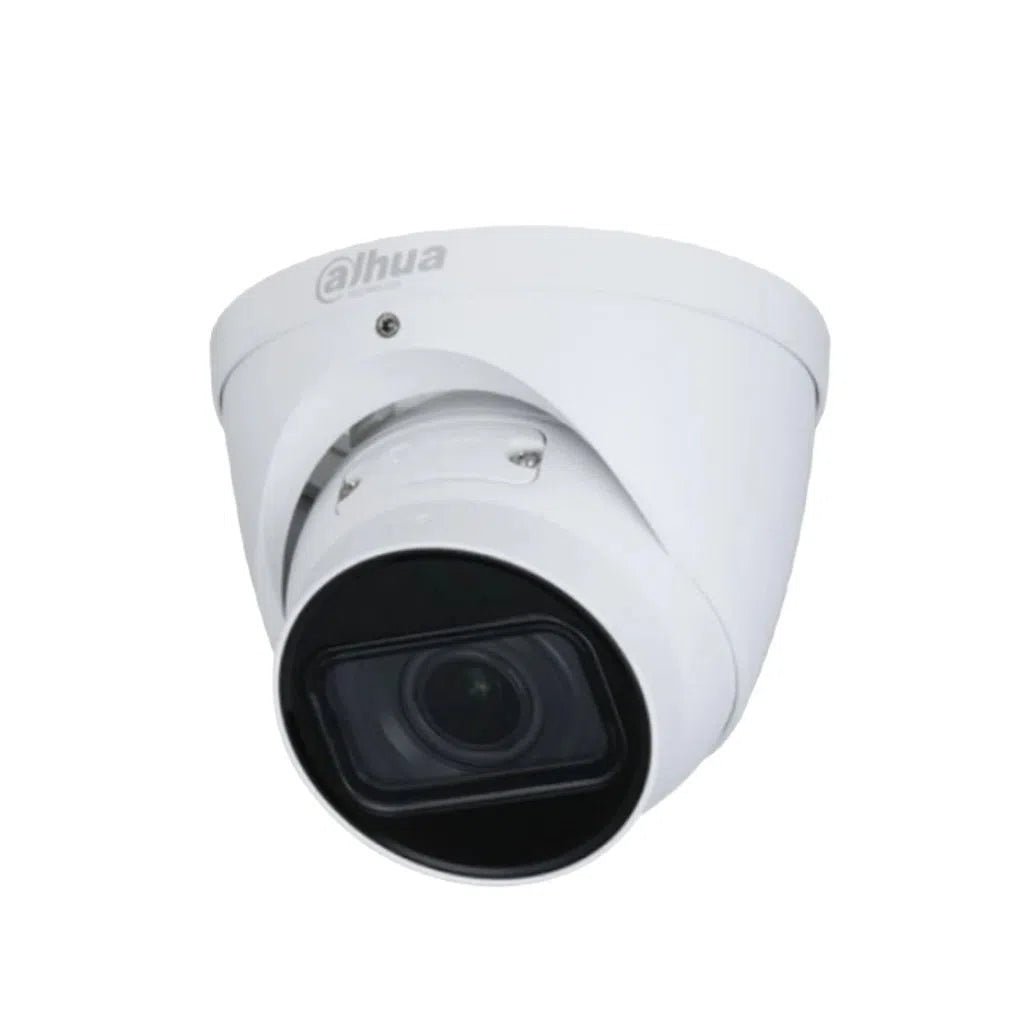
Dahua 8MP IPC-HDW2831T-ZS-S2 Lite IR Motorised Eyeball Network Camera
Login to buyKey Features
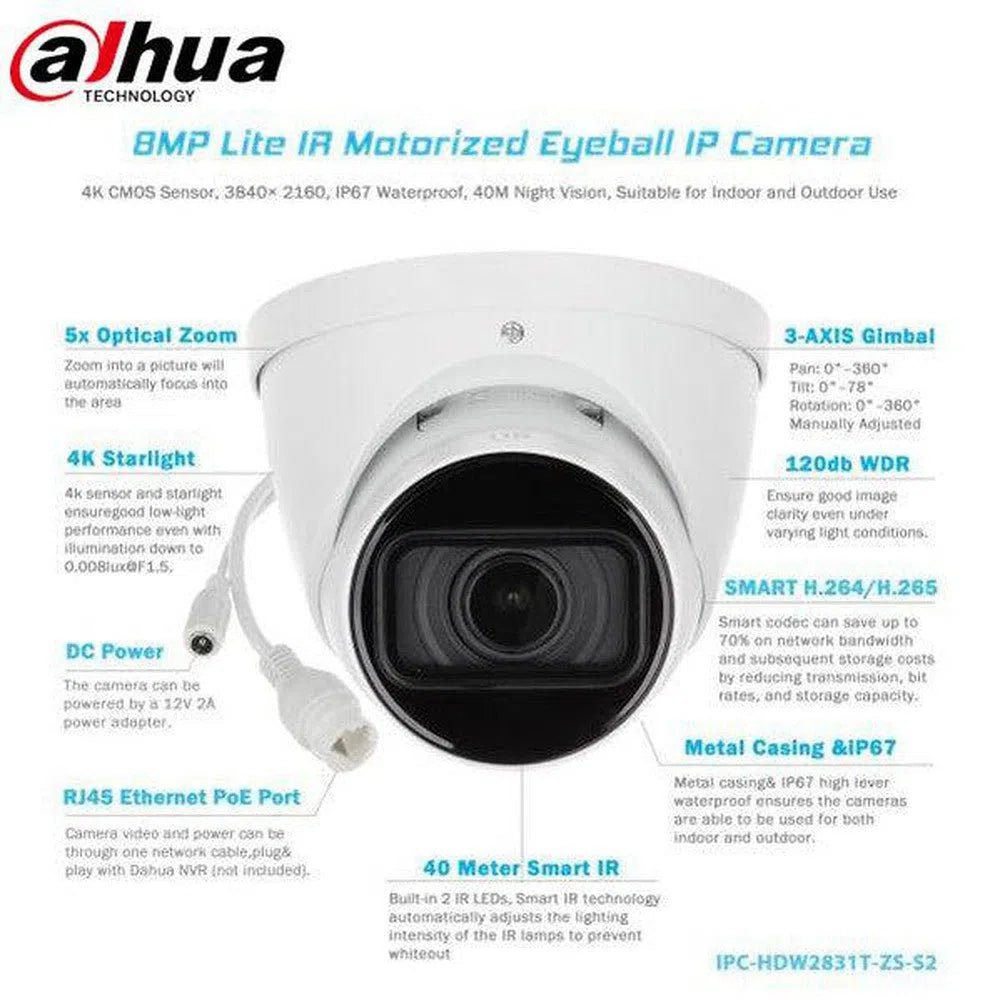
- 8MP, 1/2.7" CMOS image sensor, low illuminance, high image definition
- Outputs max. 8MP (3840 × 2160) @15 fps, and supports 2688×1520 (2688 × 1520) @25/30 fps
- H.265 codec, high compression rate, ultra-low bit rate
- Built-in IR LED, max IR distance: 40 m
- ROI, SMART H.264/H.265, flexible coding, applicable to various bandwidth and storage environments
- Rotation mode, WDR, 3D DNR, HLC, BLC, digital watermarking, applicable to various monitoring scenes
- Intelligent detection: Intrusion, tripwire
- Abnormality detection: Motion detection, video tampering, no SD card, SD card full, SD card error, network disconnection, IP conflict, illegal access, voltage detection
- Supports max. 256 GB Micro SD card
- 12V DC/POE power support
- IP67 protection
-
Vendor:
Dahua
- Tags: 8mp, Clearance, Motorised camera, Turret camera
Buying from us? You get more than just the product.
Free Pre-Programming
We can pre-configure eligible products so they're ready to install.
Free 45 Mins Onsite Support
Stuck on the job? We'll come to you. Eligible purchases include up to 45 minutes of onsite support.
Project Management
From plans to handover. We assist with design, equipment selection, programming and commissioning.
End-User Support
We help support your customers too. Give your customers the confidence with reliable local support.

- Description
Product Overview
Every fixed-lens camera forces the same compromise: you choose the field of view when you order, you find out whether it was right when you climb down the ladder, and if it was wrong you live with it.
The Dahua IPC-HDW2831T-ZS-S2 removes that entirely. It carries a motorised varifocal 2.7–13.5 mm lens, adjustable remotely from software — no ladder, no re-mounting, no ordering a second camera because the first one framed too wide. Set it up, look at the picture on your phone, and dial the zoom until the shot is right.
That zoom range also produces the longest usable reach of any camera we stock. Zoomed wide it behaves like a normal 2.8 mm camera, identifying at around 8.5 m. Zoomed in, its published Identify range extends to 28 m — over three times what a fixed-lens model manages. Paired with 40 m of infrared, it is the camera for long driveways, fence lines and car parks where the fixed-lens options simply cannot reach.
This is a Lite-series camera focused on optics and reach rather than AI. It records at 8MP, offers tripwire and intrusion detection, 120 dB WDR, microSD to 256 GB, a metal IP67 housing and PoE at under 7.6 W. It does not include human and vehicle classification or audio — see the buyer tips below, because that distinction matters.
Key Capabilities
Motorised Varifocal 2.7–13.5 mm
The reason to buy this camera. The lens adjusts remotely through software, so framing is set from the ground — or from anywhere — rather than on a ladder. Field of view runs from 113° wide down to 31° telephoto, which means one camera covers a broad courtyard or a narrow distant gate depending on how you set it.
28 m Identification Range at Telephoto
Dahua's published DORI Identify figure reaches 28 m when zoomed in, against 8.5 m at the wide end. That is the practical difference between a camera that shows someone was present at the far gate and one that shows who. No fixed-lens camera in this class comes close.
40 m Infrared Illumination
Two IR LEDs reaching 40 m with automatic or manual control and smart illumination — a third further than the 30 m typical across the range. On a long driveway or a deep yard, that extra reach is what keeps the far end of the scene visible at night rather than fading into black.
8MP Resolution
Records up to 3840 × 2160, giving crop headroom on top of the optical zoom — you can zoom the lens and crop the recording. Note the frame rate trade-off covered in the buyer tips: 8MP runs at 15 fps, with 25/30 fps available at 2688 × 1520.
Tripwire and Intrusion Detection
Draw a virtual line across a gate or a zone around a yard and be alerted when it is crossed. Note this is geometry-based detection without AI object classification — it triggers on movement across the boundary rather than distinguishing a person from an animal. Set zones tightly for best results.
120 dB WDR and Image Processing
120 dB wide dynamic range plus HLC, BLC, 3D noise reduction and rotation mode. WDR saves the backlit doorway shot; HLC suppresses headlight glare that would otherwise wash out the top of a driveway frame every time a car turns in.
Smart H.265+ Compression
Smart H.265+ and H.264+ drop the bitrate through static periods and lift it when something happens, which matters at 8MP where storage costs scale quickly. Flexible coding across a wide range of resolutions lets you match the stream to available bandwidth and drive capacity.
Full Angle Adjustment
Pan and rotate through a full 360° with 78° of tilt, so the camera can be levelled and aimed properly from an angled eave, a corner, or a soffit that does not sit square to the area of interest — then fine-tuned optically with the zoom rather than physically.
Metal IP67 Housing, Low PoE Draw
A metal body rated fully dust-tight and sealed against water, specified from −30°C to +60°C at up to 95% humidity. Runs on 802.3af PoE at under 7.6 W — comfortably light on a shared switch budget — or 12 V DC where PoE is not practical.
Best For
28m identify range when zoomed in
40m IR reaches the far end at night
Adjust remotely instead of re-mounting
No ladder required to change the view
Wide overview or tight on the entry
Clearance pricing on zoom capability
Why Choose a Motorised Varifocal Camera
Most cameras we sell are fixed lens, and for most positions that is the right choice — cheaper, simpler, nothing to go wrong. There are two situations where it is not, and both are common enough to be worth understanding.
The first is distance. A fixed 2.8 mm camera spreads its resolution across a wide scene, so identification happens within about 8 metres of the lens and everything beyond that is area awareness rather than evidence. If the thing you actually need to see is a gate 25 metres down a driveway, no amount of megapixels fixes that — the pixels are simply not landing on the subject. Optical zoom does fix it, by putting the full sensor onto a narrower slice of the scene. That is why this camera identifies at 28 m where the fixed-lens models manage 8.5 m.
The second is uncertainty. Nobody frames a camera perfectly from a plan. On a site where you are not certain what the final view should be — a new build, an unusual layout, a position you cannot easily reach again — being able to adjust the framing from software rather than from a ladder is worth real money. It also means the camera can be re-purposed if the site changes.
What you trade for that is the AI. This is a Lite-series camera built around optics rather than analytics, so it has tripwire and intrusion but not the deep-learning human and vehicle classification found in the WizSense 3-Series. If false alerts are your main frustration, that is the more important feature and we would point you to a different camera. If reach and framing flexibility are the problem, this is the one that solves it — and at clearance pricing.
Total Security Equipment stocks genuine Dahua product across our Melbourne and Sydney showrooms with compatible NVRs, brackets, storage and PoE gear, trade accounts for installers, and local support.
Buyer Decision Tips
Key Features & Technical Specifications
|
Camera |
|||||||||||||||||||||||||||||||||||||||||||||||||||||||||||
|
Image Sensor |
1/2.7” 8Megapixel progressive CMOS |
||||||||||||||||||||||||||||||||||||||||||||||||||||||||||
|
Max. Resolution |
3840 (H) × 2160 (V) |
||||||||||||||||||||||||||||||||||||||||||||||||||||||||||
|
ROM |
128 MB |
||||||||||||||||||||||||||||||||||||||||||||||||||||||||||
|
RAM |
256 MB |
||||||||||||||||||||||||||||||||||||||||||||||||||||||||||
|
Scanning System |
Progressive |
||||||||||||||||||||||||||||||||||||||||||||||||||||||||||
|
Electronic Shutter Speed |
Auto/Manual 1/3 s–1/100,000 s |
||||||||||||||||||||||||||||||||||||||||||||||||||||||||||
|
Min. Illumination |
0.008 Lux@F1.5 |
||||||||||||||||||||||||||||||||||||||||||||||||||||||||||
|
S/N Ratio |
>56 dB |
||||||||||||||||||||||||||||||||||||||||||||||||||||||||||
|
Illumination Distance |
40 m (131.23 ft) |
||||||||||||||||||||||||||||||||||||||||||||||||||||||||||
|
Illuminator On/Off Control |
Auto/Manual |
||||||||||||||||||||||||||||||||||||||||||||||||||||||||||
|
Illuminator Number |
2 (IR LED) |
||||||||||||||||||||||||||||||||||||||||||||||||||||||||||
|
Pan/Tilt/Rotation Range |
Pan: 0°–360° Tilt: 0°–78° Rotation: 0°–360° |
||||||||||||||||||||||||||||||||||||||||||||||||||||||||||
|
Lens |
|||||||||||||||||||||||||||||||||||||||||||||||||||||||||||
|
Lens Type |
Motorized vari-focal |
||||||||||||||||||||||||||||||||||||||||||||||||||||||||||
|
Mount Type |
f14 |
||||||||||||||||||||||||||||||||||||||||||||||||||||||||||
|
Focal Length |
2.7 mm–13.5 mm |
||||||||||||||||||||||||||||||||||||||||||||||||||||||||||
|
Max. Aperture |
F1.5 |
||||||||||||||||||||||||||||||||||||||||||||||||||||||||||
|
Field of View |
Horizontal: 113°–31° Vertical: 58°–17° Diagonal: 138°–36° |
||||||||||||||||||||||||||||||||||||||||||||||||||||||||||
|
Iris Type |
Fixed |
||||||||||||||||||||||||||||||||||||||||||||||||||||||||||
|
Close Focus Distance |
0.8 m–0.8 m (2.62 ft–2.62 ft) |
||||||||||||||||||||||||||||||||||||||||||||||||||||||||||
|
DORI Distance |
Lens |
Detect |
Observe |
Recognize |
Identify |
||||||||||||||||||||||||||||||||||||||||||||||||||||||
|
W |
85.3 m (279.9 ft) |
34.1 m (111.9 ft) |
17 m (55.8 ft) |
8.5 m (27.9 ft) |
|||||||||||||||||||||||||||||||||||||||||||||||||||||||
|
T |
280 m (918.6 ft) |
112 m (367.5 ft) |
56 m (183.7 ft) |
28 m (91.9 ft) |
|||||||||||||||||||||||||||||||||||||||||||||||||||||||
|
Smart Event |
|||||||||||||||||||||||||||||||||||||||||||||||||||||||||||
|
IVS |
Tripwire; intrusion |
||||||||||||||||||||||||||||||||||||||||||||||||||||||||||
|
Video |
|||||||||||||||||||||||||||||||||||||||||||||||||||||||||||
|
Video Compression |
H.265; H.264; H.264B; MJPEG (only supported by the sub stream) |
||||||||||||||||||||||||||||||||||||||||||||||||||||||||||
|
Smart Codec |
Smart H.265+/ Smart H.264+ |
||||||||||||||||||||||||||||||||||||||||||||||||||||||||||
|
Video Frame Rate |
Main stream: 3840 × 2160 (1 fps–15 fps) 2688 × 1520 (1 fps–25/30 fps) Sub stream: 704 × 576 (1 fps–25 fps) 704 × 480 (1 fps–30 fps) |
||||||||||||||||||||||||||||||||||||||||||||||||||||||||||
|
Stream Capability |
2 streams |
||||||||||||||||||||||||||||||||||||||||||||||||||||||||||
|
Resolution |
3840 × 2160 (3840 × 2160); 3072 × 2048 (3072 × 2048); 3072 ×1728 (3072 × 1728); 2592 × 1944 (2592 × 1944); 2688 × 1520 (2688 × 1520); 3M (2048 × 1536); 2304 × 1296 (2304 × 1296); 1080p (1920 × 1080); 1.3M (1280 × 960); 720p (1280 × 720); D1 (704 × 576/704 × 480); VGA (640 × 480); CIF (352 × 288/352 × 240) |
||||||||||||||||||||||||||||||||||||||||||||||||||||||||||
|
Bit Rate Control |
CBR/VBR |
||||||||||||||||||||||||||||||||||||||||||||||||||||||||||
|
Video Bit Rate |
H.264: 32 kbps–8192 kbps H.265: 12 kbps–8192 kbps |
||||||||||||||||||||||||||||||||||||||||||||||||||||||||||
|
Day/Night |
Auto(ICR)/Color/B/W |
||||||||||||||||||||||||||||||||||||||||||||||||||||||||||
|
BLC |
Yes |
||||||||||||||||||||||||||||||||||||||||||||||||||||||||||
|
HLC |
Yes |
||||||||||||||||||||||||||||||||||||||||||||||||||||||||||
|
WDR |
120 dB |
||||||||||||||||||||||||||||||||||||||||||||||||||||||||||
|
White Balance |
Auto/natural/street lamp/outdoor/manual/regional custom |
||||||||||||||||||||||||||||||||||||||||||||||||||||||||||
|
Gain Control |
Auto/Manual |
||||||||||||||||||||||||||||||||||||||||||||||||||||||||||
|
Noise Reduction |
3D NR |
||||||||||||||||||||||||||||||||||||||||||||||||||||||||||
|
Motion Detection |
OFF/ON (4 areas, rectangular) |
||||||||||||||||||||||||||||||||||||||||||||||||||||||||||
|
Region of Interest(RoI) |
Yes (4 areas) |
||||||||||||||||||||||||||||||||||||||||||||||||||||||||||
|
Smart Illumination |
Yes |
||||||||||||||||||||||||||||||||||||||||||||||||||||||||||
|
Image Rotation |
0°/90°/180°/270° (Supports 90°/270° with 3840 × 2160 resolution and lower.) |
||||||||||||||||||||||||||||||||||||||||||||||||||||||||||
|
Mirror |
Yes |
||||||||||||||||||||||||||||||||||||||||||||||||||||||||||
|
Privacy Masking |
4 areas |
||||||||||||||||||||||||||||||||||||||||||||||||||||||||||
|
Alarm |
|||||||||||||||||||||||||||||||||||||||||||||||||||||||||||
|
Alarm Event |
No SD card; SD card full; SD card error; network disconnection; IP conflict; motion detection; video tampering; tripwire; intrusion; illegal access; voltage detection; safety exception |
||||||||||||||||||||||||||||||||||||||||||||||||||||||||||
|
Network |
|||||||||||||||||||||||||||||||||||||||||||||||||||||||||||
|
Network |
RJ-45 (10/100 Base-T) |
||||||||||||||||||||||||||||||||||||||||||||||||||||||||||
|
SDK and API |
Yes |
||||||||||||||||||||||||||||||||||||||||||||||||||||||||||
|
Cyber Security |
Video encryption; firmware encryption; configuration encryption; Digest; WSSE; account lockout; security logs; IP/MAC filtering; generation and importing of X.509 certification; syslog; HTTPS; 802.1x; trusted boot; trusted execution; trusted upgrade |
||||||||||||||||||||||||||||||||||||||||||||||||||||||||||
|
Protocol |
IPv4; IPv6; HTTP; TCP; UDP; ARP; RTP ; RTSP; RTCP; RTMP; SMTP; FTP; SFTP; DHCP; DNS; DDNS; QoS; UPnP; NTP; Multicast; ICMP; IGMP; NFS; PPPoE; Bonjour |
||||||||||||||||||||||||||||||||||||||||||||||||||||||||||
|
Interoperability |
ONVIF (Profile S/Profile G/Profile T); CGI; P2P; Milestone; Genetec |
||||||||||||||||||||||||||||||||||||||||||||||||||||||||||
|
User/Host |
20 |
||||||||||||||||||||||||||||||||||||||||||||||||||||||||||
|
Storage |
FTP; SFTP; Micro SD Card (support max. 256 GB); NAS |
||||||||||||||||||||||||||||||||||||||||||||||||||||||||||
|
Browser |
IE Chrome Firefox |
||||||||||||||||||||||||||||||||||||||||||||||||||||||||||
|
Management Software |
Smart PSS; DSS; DMSS |
||||||||||||||||||||||||||||||||||||||||||||||||||||||||||
|
Mobile Phone |
IOS; Android |
||||||||||||||||||||||||||||||||||||||||||||||||||||||||||
|
Certification |
|||||||||||||||||||||||||||||||||||||||||||||||||||||||||||
|
Certifications |
CE-LVD: EN62368-1 |
||||||||||||||||||||||||||||||||||||||||||||||||||||||||||
|
Power |
|||||||||||||||||||||||||||||||||||||||||||||||||||||||||||
|
Power Supply |
12V DC/PoE (802.3af) |
||||||||||||||||||||||||||||||||||||||||||||||||||||||||||
|
Power Consumption |
< 7.6W |
||||||||||||||||||||||||||||||||||||||||||||||||||||||||||
|
Environment |
|||||||||||||||||||||||||||||||||||||||||||||||||||||||||||
|
Operating Conditions |
–30°C to +60°C (–22°F to +140°F)/less than = 95% RH |
||||||||||||||||||||||||||||||||||||||||||||||||||||||||||
|
Storage Temperature |
–40°C to +60°C (–40°F to +140°F) |
||||||||||||||||||||||||||||||||||||||||||||||||||||||||||
|
Protection |
IP67 |
||||||||||||||||||||||||||||||||||||||||||||||||||||||||||
|
Structure |
|||||||||||||||||||||||||||||||||||||||||||||||||||||||||||
|
Casing |
Metal |
||||||||||||||||||||||||||||||||||||||||||||||||||||||||||
|
Dimensions |
108.3 mm × F122 mm (4.26" × F1.80") |
||||||||||||||||||||||||||||||||||||||||||||||||||||||||||
|
Net Weight |
0.69 kg (1.52 lb) |
||||||||||||||||||||||||||||||||||||||||||||||||||||||||||
|
Gross Weight |
0.88 kg (1.94 lb) |
||||||||||||||||||||||||||||||||||||||||||||||||||||||||||
Ideal Use Cases
Long Driveways and Distant Gates
The clearest case for this camera. Where the gate sits 25 metres from the house, a fixed 2.8 mm camera will show that a vehicle arrived and nothing more. Zoomed in, this one identifies at 28 m and the 40 m infrared keeps the far end lit after dark. Mount it aimed at the gate specifically and cover the rest of the frontage with a cheaper wide camera.
Fence Lines and Rural Boundaries
Long boundaries are impossible to cover usefully with wide-angle cameras — the subject is always too small by the time they matter. Optical zoom concentrates the sensor on the section that counts, and the extended IR reach suits properties with no lighting at the perimeter.
Positions You Cannot Easily Reach Again
A high gable, a second-storey eave, a pole mount, a position over a roof pitch — anywhere getting a ladder back up is a genuine job. Motorised zoom means framing can be corrected from software months later without anyone climbing anything, which on some sites is worth the price difference by itself.
Car Parks and Commercial Forecourts
Open areas where the useful framing is not obvious until the camera is live. Start wide to understand the traffic pattern, then zoom in on the entry lane, the loading bay or the section that keeps generating incidents — without ordering a second camera to get there.
New Builds and Sites Where the Layout Is Still Changing
Cameras get installed before landscaping goes in, before the shed is built, before the parking layout settles, and before anyone knows where the actual problem area will turn out to be. A fixed lens commits you to a guess made months too early. A motorised varifocal lets the coverage follow the site as it develops — reframe when the fence moves, tighten onto the new gate, widen when the driveway is extended. On a project where the final layout is genuinely unknown, that flexibility avoids the far more expensive alternative of replacing cameras that ended up pointing at the wrong thing.
Choosing the Right Model
Choose this model if…
- You need identification detail beyond about 10 metres — this is the main reason.
- You want to set or change framing remotely rather than from a ladder.
- The site is deep and unlit and you need 40 m of infrared.
- The mounting position is hard to access.
- The final coverage requirement is not settled yet.
- You want zoom capability at clearance pricing and can live without AI classification.
Choose a different model if…
- False alerts are your main frustration. This has no AI human or vehicle classification — a WizSense 3-Series camera with SMD is the right answer.
- You need smooth 25/30 fps at full 8MP. Full resolution here runs at 15 fps.
- You want colour footage at night. This is infrared only — greyscale after dark. Dual light or WizColor models retain colour.
- You want audio. There is no microphone at all on this model.
- You want active deterrence. No speaker, no strobe, no siren — a TiOC model adds those.
- The framing is obvious and fixed. A fixed-lens camera is cheaper and simpler for a standard driveway or entry.
FAQs
What does motorised varifocal actually mean?
The lens can zoom in and out, and the zoom is driven by a motor you control from software rather than by hand. On a fixed-lens camera the field of view is decided when you order and cannot be changed. On this one you mount the camera, look at the live picture, and adjust the framing remotely until it is right — including months later, without touching the camera.
How far away can it identify someone?
Around 8.5 m zoomed wide, and up to 28 m zoomed in — those are Dahua's published Identify figures under the DORI standard. Identify is the band covering recognition of a stranger or reading a plate. The much larger 280 m figure you will see quoted is Detect, which only means registering that something is present. See the DORI table above; it is the single most useful thing on this page for planning where to mount.
Does it have human and vehicle detection?
No. It has tripwire and intrusion detection, which trigger when movement crosses a boundary you define, but it does not include SMD or deep-learning classification — so it cannot tell a person from an animal, a branch or a shadow. Expect more false alerts than a WizSense 3-Series camera, particularly in leafy or windy positions. If reducing false alarms is your priority, talk to us about a 3-Series model instead.
Why does 8MP only run at 15 fps?
It is a limitation of this camera's processing at full resolution. At 3840 × 2160 the maximum is 15 fps; dropping to 2688 × 1520 gives you 25/30 fps. In practice 15 fps is perfectly adequate for a driveway, gate or boundary where movement is not fast, but it can look choppy for people moving quickly close to the lens. For busy entries or retail floors, run 2688 × 1520 — most installs look better that way.
Does it record audio?
No. There is no built-in microphone on this model, so recordings are video only and there are no audio detection events. For driveways and perimeters that is rarely a problem, but if audio matters at your position, look at a model with a built-in mic instead.
Does it record in colour at night?
No. This is an infrared camera, so once ambient light drops below the switching threshold it moves to IR and records in greyscale. The upside is 40 m of IR reach, longer than most. If retaining colour after dark matters, ask about the Smart Dual Light or WizColor models, which either trigger a warm light on detection or run colour continuously.
Can I zoom it from my phone?
Zoom is controlled through the camera's own interface and through compatible Dahua software including SmartPSS, DSS and DMSS. Exactly where the control appears depends on the recorder and app you are using, so it is worth confirming your zoom controls work before you close up the installation rather than discovering it afterwards.
Is a varifocal camera worth it over a fixed lens?
For most positions, no — a fixed lens is cheaper, simpler and perfectly adequate for a standard driveway or entry. It is worth it in two situations: when you need identification detail beyond about 10 metres, which optical zoom achieves and extra megapixels do not; and when the framing is uncertain or the mounting position is hard to reach again. Outside those, buy fixed and save the money.
What card does it take and how much will it hold?
MicroSD up to 256 GB, plus FTP, SFTP and NAS storage. At 8MP that fills faster than you might expect, so for standalone edge recording plan the resolution and frame rate accordingly or run it to an NVR. Use a surveillance-rated or high-endurance card — standard consumer cards are not designed for continuous writing and typically fail within months, usually silently.
What power does it need?
Standard 802.3af PoE over a single Cat5e or Cat6 run, drawing under 7.6 W — light on a shared switch budget. 12 V DC is available as an alternative. Use solid copper cable rather than copper-clad aluminium on longer runs; CCA is a frequent cause of intermittent PoE dropouts and cameras that reboot on cold mornings.
Will it work with my existing NVR?
It supports ONVIF Profile S, G and T plus Milestone and Genetec integration, so it will record on most recorders. For full access to zoom control, IVS event handling and configuration, a compatible Dahua NVR is the straightforward option. Check your recorder handles 8MP per channel if you intend to run it at full resolution — send us the model and we will confirm.
Will it cope with exposed Australian conditions?
Yes. IP67 means fully dust-tight and rated against temporary water immersion, and the metal housing is specified from −30°C to +60°C at up to 95% humidity — covering rooftops, coastal walls, tropical humidity and inland dust. The rating applies to the camera body, so seal the cable entry and use a weatherproof junction box for any termination, because that join rather than the housing is where outdoor failures almost always begin.
Where can I buy it and what support is included?
Available from Total Security Equipment online and across both showrooms, with Australia-wide shipping and compatible Dahua NVRs, brackets, junction boxes, storage and PoE gear in stock. Trade accounts and volume pricing are available for installers, and our team can advise on zoom setting, camera placement and NVR compatibility before you order. As a clearance line, availability is limited to remaining stock.
Additional Information
Melbourne HQ
26 Davies Ave., Sunshine North, VIC 3020
03 9079 5566
Sydney Branch
38 Lisbon St., Fairfield East, NSW 2165
02 8722 0348
Ordering & Support
- Australia-wide shipping
- Clearance line — limited to remaining stock
- Compatible Dahua NVRs, brackets and storage available
- Trade accounts and volume pricing
- Phone support on zoom setup and NVR compatibility
- Download Spec Sheet
Not sure whether you need optical zoom or whether a fixed-lens camera would do the job? Call our Melbourne team on 03 9079 5566 or Sydney on 02 8722 0348 — tell us the distance to what you need to see and we will tell you honestly which camera suits.